
Got a photo? Identify mushrooms instantly with the Mushby app
Open the appDescription
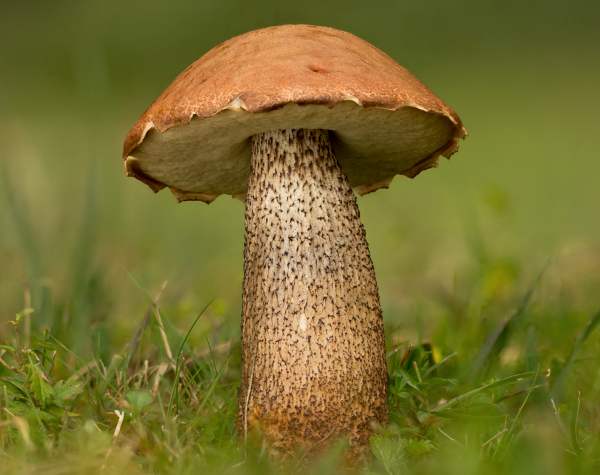
Leccinum versipelle is a species of bolete fungus in the family Boletaceae, native to Europe. Described by Fries in 1825, it was known for many years as Leccinum testaceoscabrum. Its fruit bodies (mushrooms) have orange caps and stout, scaber-stemmed stalks. It is an edible mushroom, though not as highly regarded as some other boletes.
How to Identify
- Cap
- The cap is typically 5–15 cm (2–6 in) in diameter, though can reach 20 cm (8 in). It is convex when young, becoming flatter with age. The cap surface is dry and smooth, and ranges in color from orange to reddish-orange. The flesh is white, but turns greyish-purple when cut.
- Gills
- This mushroom has pores instead of gills. The pores are small and round, and white when young, becoming greyish with age. The pore surface is easily separable from the flesh of the cap.
- Stem
- The stem is 8–20 cm (3–8 in) long and 1–3 cm (0.4–1.2 in) thick. It is stout and cylindrical, tapering slightly towards the apex. The stem surface is covered in small, rough scales (scabers) that are initially whitish, but become darker with age, eventually turning blackish-brown. The stem flesh is whitish, but like the cap flesh, it turns greyish-purple when cut.
- Flesh
- The flesh is white, but turns greyish-purple when cut, eventually becoming almost black.
- Fruiting body
- The fruit body of Leccinum versipelle is a bolete, meaning it has a cap and stem and a pore surface instead of gills.
- Habitat
- Leccinum versipelle is found in deciduous and coniferous forests, often in association with birch trees (Betula species). It fruits from summer to autumn.
Key Facts
- Cap surfaces: Dry and smooth
- Growth Form: Solitary or in small groups
- Spore Print: Brown
- Body color: Orange to reddish-orange cap, whitish stem with dark scabers
- Odor: Mild and mushroomy
- Flesh bruises: Turns greyish-purple, then blackish
- Height: 8–20 cm (3–8 in)
- Cap Diameter: 5–15 cm (2–6 in)
- Nutrient gathering: Mycorrhizal
Safe
SafeLeccinum versipelle is generally considered an edible mushroom, but it should be cooked thoroughly before consumption. Some individuals may experience gastrointestinal upset if it is eaten raw or undercooked.
Quick Check
- Odor: Mild and mushroomy
- Fruiting: Summer to autumn
- Substrate: Deciduous and coniferous forests, often with birch
Where to Find
Europe
Native to Europe, often found in association with birch trees.
Deciduous and coniferous forests
Prefers deciduous and coniferous forests.
Finding Tips
Look near birch trees
This mushroom is often found in association with birch trees.
Check from summer to autumn
It fruits from summer to autumn.
Similar Species
Rough-stemmed bolete
mushroom
Also known as: Leccinum scabrum
Scientific Classification
- Phylum
- Basidiomycota
- Class
- Agaricomycetes
- Order
- Boletales
- Family
- Boletaceae
- Genus
- Leccinum
Storage Information
- Max Temperature: 25
- Freezing duration: 3
- Min Temperature: 2
- Refrigeration: 2
How to Clean
Gently brush off any dirt or debris from the cap and stem. Avoid soaking in water, as boletes tend to absorb water and become slimy.
Explore Orange Birch Bolete
Identify mushrooms anywhere
Free on iOS, Android, and Web. Photo identification, full database, and your personal collection.