
Got a photo? Identify mushrooms instantly with the Mushby app
Open the appDescription
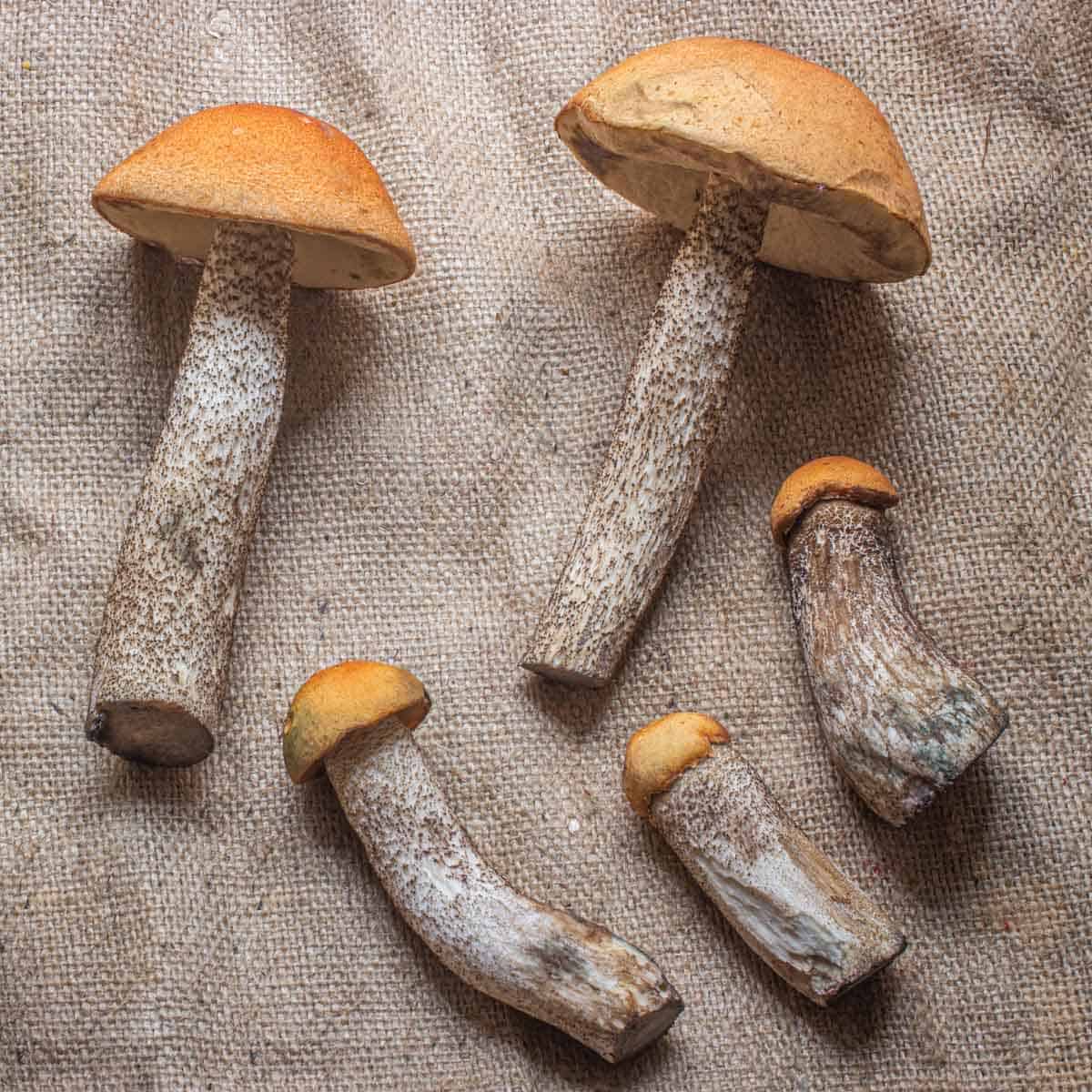
Leccinum scabrum is an edible mushroom species in the family Boletaceae, found exclusively under birch trees. It is recognized by its brown cap, greyish stem covered in dark scabers, and its association with birch.
How to Identify
- Cap
- The cap is hemispherical when young, convex to flattened in age, 5-15 cm in diameter. The cap surface is smooth, dry, and varies in color from pale tan to dark brown. The flesh is white, often bruising pinkish or greyish, especially when mature.
- Gills
- Does not have gills. It has pores
- Stem
- The stem is cylindrical or slightly club-shaped, 8-15 cm long and 1-3 cm thick. The stem is covered in dark, scabrous dots or scales (scabers) which are initially whitish but darken with age, eventually becoming blackish. The stem flesh is whitish, fibrous, and can be tougher than the cap flesh.
- Flesh
- Flesh is white and turns pinkish when cut, after that it turns grey or blackish.
- Fruiting body
- The fruit body of Leccinum scabrum is a bolete, meaning it has pores instead of gills. It is typically medium to large in size.
- Habitat
- Exclusively found in mycorrhizal association with birch trees (Betula species) in forests, parks, and disturbed areas. It fruits from summer to autumn.
Key Facts
- Cap surfaces: Smooth, dry.
- Growth Form: Mycorrhizal.
- Spore Print: Brown.
- Body color: Tan, brown, grey to blackish scabers on stem; white flesh bruising grayish.
- Odor: Mild, mushroomy.
- Flesh bruises: Yes, often pinkish or grayish.
- Height: 8-15 cm
- Cap Diameter: 5-15 cm
- Nutrient gathering: Mycorrhizal
Safe
Mild ToxicityLeccinum scabrum is generally considered edible, but caution is advised. Some individuals may experience gastrointestinal upset. Thorough cooking is essential. Avoid consuming specimens that are old, waterlogged, or have signs of decay. Some Leccinum species can cause adverse reactions in certain individuals.
Quick Check
- Odor: Mild and mushroomy, not distinctive.
- Fruiting: Summer to Autumn.
- Substrate: Grows exclusively with birch trees.
Where to Find
Under Birch Trees
Look specifically under birch trees in various habitats, including forests, parks, and along roadsides where birch trees are present.
Northern Hemisphere
Common in Northern Europe, Asia, and North America, wherever birch trees grow.
Finding Tips
Check After Rain
Bolete mushrooms often appear shortly after rainfall, as moisture promotes their growth.
Look for Birch Saplings
Young birch trees and saplings are just as likely to host Birch Boletes as mature trees.
Check Open Areas
Can be found in open, grassy areas near birch, not just deep within the forest.
Similar Species
Orange Birch Bolete
Mushroom
Also known as: Leccinum aurantiacum
Red-capped Scaber Stalk
Mushroom
Also known as: Leccinum rufum
Aspen Bolete
Mushroom
Also known as: Leccinum populinum
Scientific Classification
- Phylum
- Basidiomycota
- Class
- Agaricomycetes
- Order
- Boletales
- Family
- Boletaceae
- Genus
- Leccinum
Storage Information
- Max Temperature: Room temperature not recommended for storage.
- Freezing duration: Up to 6-12 months
- Min Temperature: 2-4°C (refrigerator temperature)
- Refrigeration: 2-3 days
How to Clean
Carefully brush off any dirt or debris from the cap and stem. A soft brush or slightly damp cloth can be used. Avoid soaking the mushroom in water, as it can become waterlogged. Trim the base of the stem if it's particularly dirty or tough.
Explore Brown Birch Bolete
Identify mushrooms anywhere
Free on iOS, Android, and Web. Photo identification, full database, and your personal collection.