
Got a photo? Identify mushrooms instantly with the Mushby app
Open the appDescription
Lactarius torminosus, commonly known as the fleecy milk-cap, is a fungus of the genus Lactarius. It is generally considered inedible due to its acrid taste, though some reports state that it is eaten after suitable preparation. It is typically found in forests, especially under birch trees.
How to Identify
- Cap
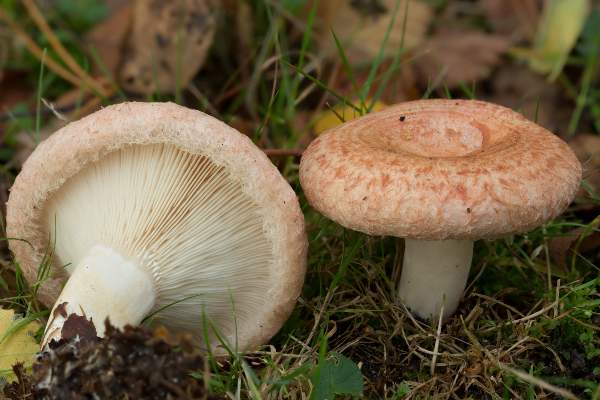
- The cap is typically 5–15 cm in diameter, convex to flattened, and has a central depression. The cap margin is rolled inward and has a hairy or woolly texture. The color is typically pinkish-orange to salmon.
- Gills
- The gills are crowded and adnate to slightly decurrent. They are typically pale pinkish-buff in color.
- Stem
- The stem is typically 3–8 cm long and 1–2 cm thick. It is cylindrical or slightly tapered towards the base. The stem surface is dry and smooth, and the color is similar to the cap.
- Flesh
- The flesh is firm and white, but may stain brownish when cut.
- Fruiting body
- The fruit body is a mushroom with a cap and a stem. The cap is typically 5–15 cm in diameter, convex to flattened, and has a central depression. The cap margin is rolled inward and has a hairy or woolly texture. The color is typically pinkish-orange to salmon.
- Habitat
- Lactarius torminosus is typically found in forests, especially under birch trees. It is a mycorrhizal fungus, forming a symbiotic relationship with the roots of trees.
Key Facts
- Cap surfaces: Hairy or woolly texture, especially at the margin.
- Growth Form: Solitary to scattered.
- Spore Print: Cream to pale yellow.
- Body color: Pinkish-orange to salmon.
- Odor: Distinctive, slightly fruity or pungent.
- Flesh bruises: May stain brownish when cut.
- Height: 3-8 cm
- Cap Diameter: 5-15 cm
- Nutrient gathering: Mycorrhizal
Toxic
Moderate ToxicityLactarius torminosus contains toxins that can cause gastrointestinal upset if consumed raw. Symptoms may include nausea, vomiting, and diarrhea. Proper cooking or pickling is necessary to neutralize these toxins.
Quick Check
- Odor: Distinctive, sometimes described as slightly fruity or pungent.
- Fruiting: Late summer to autumn.
- Substrate: Mycorrhizal with birch trees, found in forests.
Where to Find
Europe
Common throughout Europe, especially in association with birch trees.
North America
Found in North America, particularly in northern regions with birch forests.
Finding Tips
Look Under Birch Trees
This mushroom is commonly found in mycorrhizal association with birch trees, so focus your search in these areas.
Check in Late Summer to Autumn
Lactarius torminosus typically fruits from late summer to autumn. This is the best time to search for them.
Similar Species
Lactarius pubescens
Lactarius
Also known as: Downy Milk Cap
Scientific Classification
- Phylum
- Basidiomycota
- Class
- Agaricomycetes
- Order
- Russulales
- Family
- Russulaceae
- Genus
- Lactarius
Explore Fleecy Milk-cap
Identify mushrooms anywhere
Free on iOS, Android, and Web. Photo identification, full database, and your personal collection.