
Got a photo? Identify mushrooms instantly with the Mushby app
Open the appDescription
Lactarius sanguifluus, commonly known as the Bloody Milkcap, is a highly prized edible mushroom belonging to the Russulaceae family. It is characterized by its distinctive reddish-orange to wine-red latex (milk) that exudes when the mushroom is cut or bruised, and its association with pine trees. This species is particularly sought after in Mediterranean regions for its culinary value.
How to Identify
- Cap
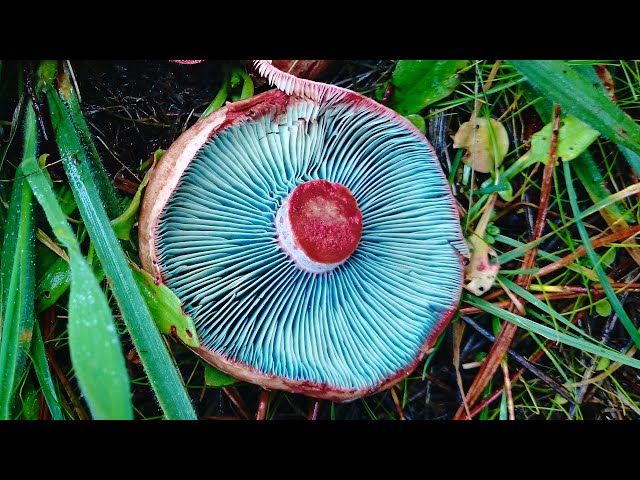
- The cap typically ranges from 4 to 10 cm (1.6 to 4 inches) in diameter, initially convex, becoming flattened or slightly depressed in the center with age, sometimes with a shallow umbilicus. The margin is often inrolled when young, becoming wavy and sometimes lobed with maturity. The color varies from reddish-orange to brick-red, often with greenish stains developing with age or handling, especially towards the center. The surface is smooth, dry, and sometimes slightly sticky when moist. Concentric zones (zonation) may be faintly visible, especially when young.
- Gills
- The gills are decurrent (running down the stem), crowded, and brittle. They are initially pale orange to reddish-orange, becoming darker and often developing greenish stains with age or bruising. They exude the characteristic wine-red latex when damaged.
- Stem
- The stem is 3 to 8 cm (1.2 to 3.1 inches) long and 1 to 2.5 cm (0.4 to 1 inch) thick, cylindrical or slightly tapering towards the base, often hollow with age. The color is similar to the cap, reddish-orange to brick-red, sometimes with darker spots or scrobiculations (small pits) that are often concolorous with the stem. The surface is smooth or finely pruinose (powdery).
- Flesh
- The flesh is firm and brittle, whitish to pale orange, and quickly stains wine-red to purplish-red when cut or broken, especially near the gills and stem. It exudes a copious, thick, wine-red to blood-red latex (milk) when cut, which does not change color significantly upon exposure to air. The taste is mild to slightly acrid, and the smell is faintly fruity or indistinct.
- Fruiting body
- The fruiting body is a typical agaric (gilled mushroom) with a cap, gills, and a central stem. It is robust and fleshy.
- Habitat
- Lactarius sanguifluus is a mycorrhizal fungus, forming a symbiotic relationship primarily with pine trees (Pinus species), particularly Scots Pine (Pinus sylvestris) and other two-needled pines. It is found in coniferous forests, often on calcareous soils.
Key Facts
- Cap surfaces: Smooth, dry, sometimes slightly sticky when moist
- Growth Form: Solitary to scattered or gregarious
- Spore Print: Pale ochre to yellowish-orange
- Body color: Reddish-orange to brick-red, often with greenish stains
- Odor: Faintly fruity or indistinct
- Flesh bruises: Stains wine-red to purplish-red when cut, exuding blood-red latex
- Height: 3-8 cm (1.2-3.1 inches)
- Cap Diameter: 4-10 cm (1.6-4 inches)
- Nutrient gathering: Mycorrhizal
Safe
SafeLactarius sanguifluus is considered an excellent edible mushroom, highly prized in many cultures. However, it is crucial to correctly identify it to avoid confusion with potentially toxic or less palatable look-alikes. There are no known toxins in L. sanguifluus itself.
Quick Check
- Odor: Faintly fruity or indistinct
- Fruiting: Late summer to late autumn
- Substrate: Soil, mycorrhizal with pine trees
Where to Find
Mediterranean Europe
Abundant in pine forests, especially in Spain, France, Italy, and Greece.
North Africa
Found in pine-dominated areas.
Parts of Asia
Reported in some regions with suitable pine habitats.
Finding Tips
Pine Association
Always look for this mushroom under pine trees, particularly older stands. It has a strong mycorrhizal relationship with Pinus species.
Calcareous Soils
While not exclusive, it often prefers calcareous (limestone-rich) soils, which can be a helpful indicator in some regions.
Seasonal Availability
Typically fruits from late summer through autumn, often peaking after periods of rain.
Check for Latex
The most definitive identification feature is the immediate exudation of wine-red to blood-red latex when the gills or flesh are cut or broken. This latex should not change color significantly.
Look for Green Stains
Older specimens or bruised areas often develop distinctive greenish stains, which can be a good secondary indicator.
Similar Species
Saffron Milkcap
Mushroom
Also known as: Delicious Milkcap
False Saffron Milkcap
Mushroom
Also known as: Lactarius deterrimus
Spruce Milkcap
Mushroom
Also known as: Lactarius salmonicolor
Scientific Classification
- Phylum
- Basidiomycota
- Class
- Agaricomycetes
- Order
- Russulales
- Family
- Russulaceae
- Genus
- Lactarius
Storage Information
- Max Temperature: 4°C
- Freezing duration: 6 months
- Min Temperature: 0°C
- Refrigeration: 5 days
How to Clean
Gently brush off any dirt or debris with a soft brush or damp cloth. Avoid washing under running water as mushrooms can absorb excess moisture, affecting texture and flavor. Trim off any damaged or insect-ridden parts. The gills can sometimes hold a lot of debris, so careful cleaning is important.
Explore Bloody Milkcap
Identify mushrooms anywhere
Free on iOS, Android, and Web. Photo identification, full database, and your personal collection.