
Got a photo? Identify mushrooms instantly with the Mushby app
Open the appDescription
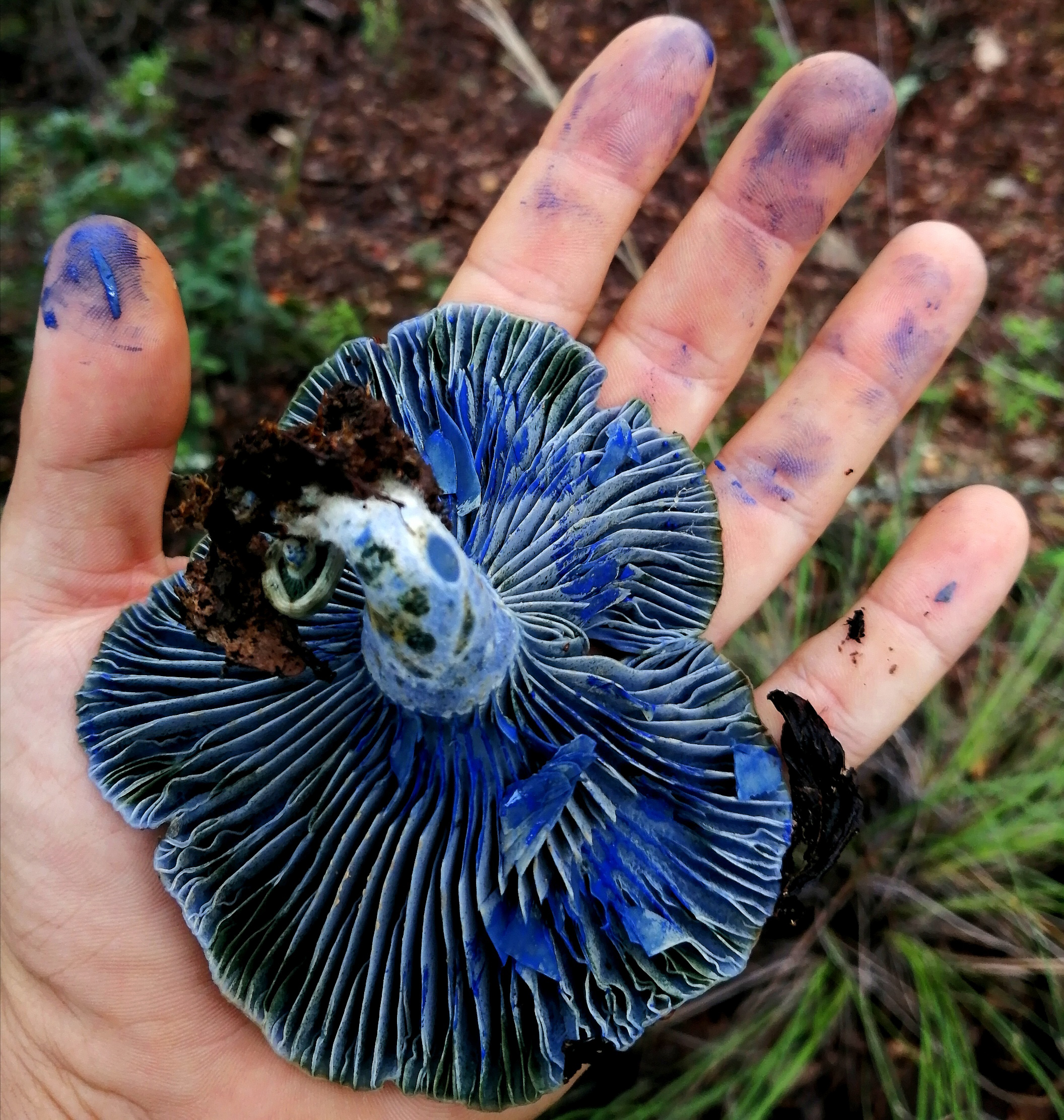
The Indigo Milk Mushroom (Lactarius indigo) is a distinctive and easily recognizable edible mushroom known for its striking blue color. Both the raw mushroom and the milk it exudes when cut or broken are indigo blue, though the color fades with age and exposure. It is found in deciduous and coniferous forests of eastern North America, East Asia, and Central America.
How to Identify
- Cap
- The cap is typically 5-15 cm in diameter, initially convex, becoming flattened to slightly depressed with age. The color is indigo blue when young, fading to a paler bluish-gray or grayish-brown with age. It may have darker concentric zones or spots. The surface is smooth and can be slightly sticky when moist.
- Gills
- The gills are attached to slightly running down the stem (decurrent to slightly decurrent), closely spaced, and indigo blue. They may stain greenish where damaged.
- Stem
- The stem is 2-8 cm long and 1-2.5 cm thick, equal or slightly tapering towards the base. It is indigo blue, fading with age, and may have pits or spots. The surface is smooth or slightly sticky.
- Flesh
- The flesh is indigo blue, though this color fades when exposed to air. It may stain greenish when cut.
- Fruiting body
- Medium to large in size, with a distinctive indigo blue color when young.
- Habitat
- Found in deciduous and coniferous forests, often under oak and pine trees. It forms mycorrhizal associations with these trees.
Key Facts
- Cap surfaces: Smooth, slightly sticky when moist
- Growth Form: Solitary or scattered
- Spore Print: Cream to pale yellow
- Body color: Indigo blue, fading to bluish-gray or grayish-brown
- Odor: Mild, not distinctive
- Flesh bruises: May stain greenish when cut
- Height: 2-8 cm
- Cap Diameter: 5-15 cm
- Nutrient gathering: Mycorrhizal
Safe
SafeLactarius indigo is considered edible, though it is not highly sought after by all. It is not known to be poisonous, but as with any wild mushroom, proper identification is crucial before consumption. Some individuals may experience gastrointestinal upset.
Quick Check
- Odor: Mild
- Fruiting: Summer to autumn
- Substrate: Soil, under hardwoods and conifers
Where to Find
Eastern North America
Deciduous and coniferous forests
East Asia
Deciduous and coniferous forests
Central America
Deciduous and coniferous forests
Finding Tips
Habitat
Look for it under oak and pine trees.
Signs
Check for blue staining on the ground where the mushroom has been disturbed.
Timing
Indigo Milk Mushrooms often appear after rainfall.
Similar Species
Other Lactarius species
Mushroom
Also known as: None
Scientific Classification
- Phylum
- Basidiomycota
- Class
- Agaricomycetes
- Order
- Russulales
- Family
- Russulaceae
- Genus
- Lactarius
Storage Information
- Max Temperature: 4
- Freezing duration: 3
- Min Temperature: 2
- Refrigeration: 2
How to Clean
Gently brush off any dirt or debris. If needed, lightly rinse with water and pat dry. Avoid soaking, as they can absorb water and become soggy.
Explore Indigo Milk Mushroom
Identify mushrooms anywhere
Free on iOS, Android, and Web. Photo identification, full database, and your personal collection.