
Got a photo? Identify mushrooms instantly with the Mushby app
Open the appDescription
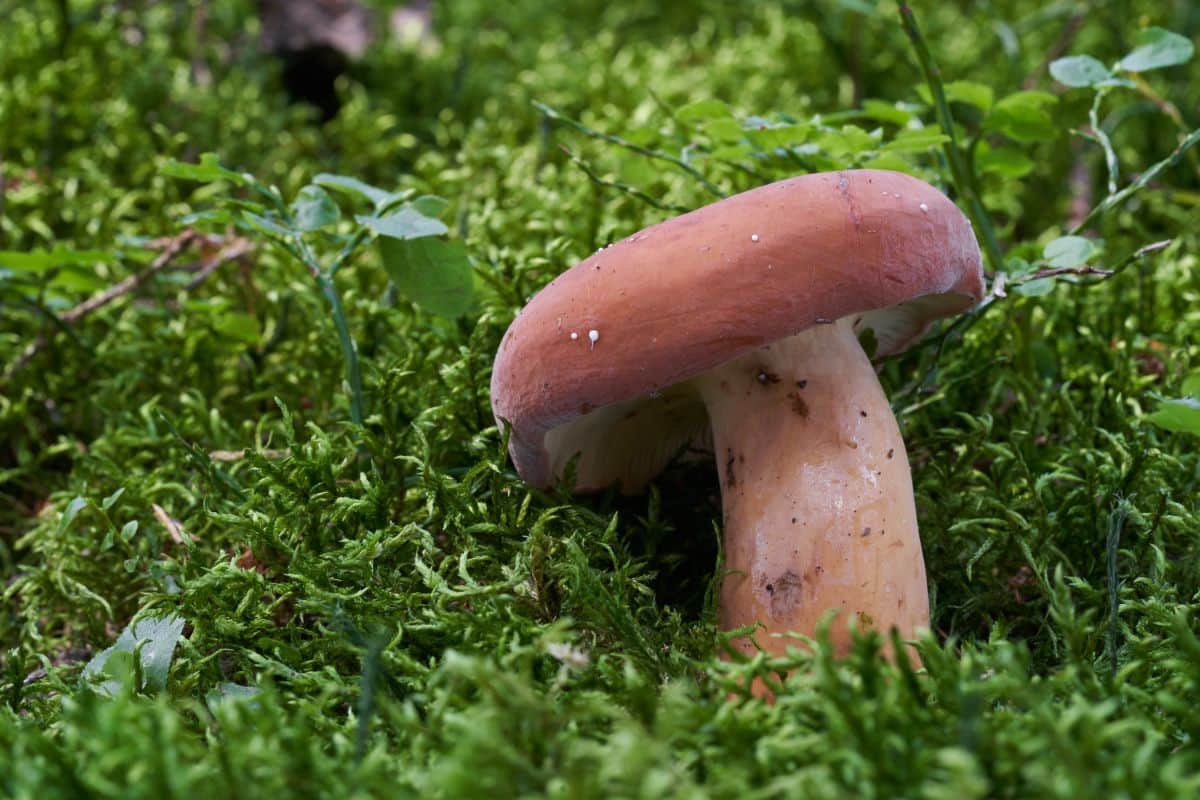
Lactarius blennius, commonly known as the Beech Milkcap, is a species of fungus in the family Russulaceae. It is found primarily in Europe, associated with beech trees. The mushroom is characterized by its milky latex, which is initially white but slowly turns yellow upon exposure to air. The cap is typically convex to flattened, with a slightly depressed center, and ranges in color from pale ochre to tan. The gills are crowded and decurrent, and the stem is cylindrical and smooth. The flesh is whitish and has a mild to slightly acrid taste.
How to Identify
- Cap
- The cap is convex to flattened, often with a slightly depressed center. The surface is smooth and slightly sticky when moist. The color ranges from pale ochre to tan, sometimes with faint concentric zones.
- Gills
- The gills are crowded and decurrent, meaning they run down the stem. They are typically pale cream to ochre in color.
- Stem
- The stem is cylindrical, smooth, and typically the same color as the cap or slightly paler. It is usually 3 to 7 cm long and 1 to 2 cm thick.
- Flesh
- The flesh is whitish and firm. When cut, it exudes a milky latex that is initially white but slowly turns yellow upon exposure to air.
- Fruiting body
- The fruiting body of Lactarius blennius is a mushroom with a cap and stem. The overall size is medium, with the cap typically ranging from 5 to 10 cm in diameter.
- Habitat
- Lactarius blennius is found primarily in Europe, associated with beech trees. It typically grows in deciduous forests, often near or under beech trees.
Key Facts
- Cap surfaces: Smooth, slightly sticky when moist
- Growth Form: Mycorrhizal
- Spore Print: Cream to pale ochre
- Body color: Pale ochre to tan
- Odor: Mild
- Flesh bruises: Does not typically bruise
- Height: 3-7 cm
- Cap Diameter: 5-10 cm
- Nutrient gathering: Mycorrhizal
Safe
SafeLactarius blennius is generally considered edible, but it has a slightly acrid taste that may not be palatable to everyone. It is not known to be toxic, but caution should be exercised when consuming any wild mushroom.
Quick Check
- Odor: Mild, not distinctive
- Fruiting: Late summer to autumn
- Substrate: Under beech trees in deciduous forests
Where to Find
Europe
Primarily found in Europe, especially in regions with beech forests.
Deciduous Forests
Grows in deciduous forests, often near or under beech trees.
Finding Tips
Look Under Beech Trees
Search for this mushroom in areas with a high concentration of beech trees, especially in late summer and autumn.
Check for Milky Latex
When identifying, cut the flesh to check for the characteristic milky latex that turns yellow upon exposure to air.
Similar Species
Lactarius tabidus
mushroom
Also known as: Birch Milkcap
Scientific Classification
- Phylum
- Basidiomycota
- Class
- Agaricomycetes
- Order
- Russulales
- Family
- Russulaceae
- Genus
- Lactarius
Storage Information
- Max Temperature: 4
- Freezing duration: N/A
- Min Temperature: 2
- Refrigeration: 2-3 days
How to Clean
To clean Lactarius blennius, gently brush off any dirt or debris from the cap and stem. Avoid washing them unless necessary, as they can become waterlogged. If washing is required, do so quickly and pat them dry immediately.
Explore Beech Milkcap
Identify mushrooms anywhere
Free on iOS, Android, and Web. Photo identification, full database, and your personal collection.