
Got a photo? Identify mushrooms instantly with the Mushby app
Open the appDescription
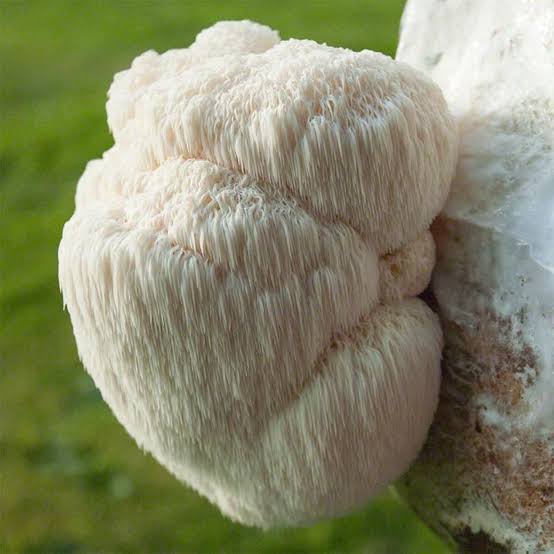
Hericium erinaceus is a distinctive fungus characterized by its unique cascading spines, resembling a lion's mane. It is a saprophytic and weakly parasitic fungus that grows on dead or dying hardwood trees. Notably, it is both edible and possesses a range of medicinal properties, and has been used in traditional medicine, especially in Asia for centuries.
How to Identify
- Cap
- Lion's Mane does not have a distinct cap in the traditional sense. The spines emerge from a central base.
- Gills
- Absent. Instead, it has spines.
- Stem
- Absent or indistinct. The fruit body attaches directly to the substrate.
- Flesh
- The flesh is white, firm, and succulent when young. As it matures, it can become slightly tougher and may develop a slightly bitter taste.
- Fruiting body
- The fruit body is globose to subglobose, 5-35 cm in diameter. It is composed of long, pendulous spines, ranging from 1-6 cm in length. The color is typically white to creamy white when fresh, yellowing with age or upon handling.
- Habitat
- Grows on dead or dying hardwood trees, particularly oak, beech, maple, and birch. It is saprophytic, meaning it obtains nutrients from decaying organic matter, but can also be a weak parasite on living trees.
Key Facts
- Cap surfaces: N/A (no distinct cap)
- Growth Form: Globose, with pendent spines.
- Spore Print: White
- Body color: White to creamy white when young, yellowing with age.
- Odor: Slightly sweet, seafood-like, or earthy.
- Flesh bruises: Does not typically bruise.
- Height: 5-35 cm diameter
- Cap Diameter: N/A
- Nutrient gathering: Saprophytic and weakly parasitic.
Safe
SafeLion's Mane is generally considered safe to eat, and toxicity is rare and not well documented. However, as with any wild mushroom, individual reactions can vary.
Quick Check
- Odor: Slightly sweet, seafood-like, or earthy.
- Fruiting: Globose to subglobose with cascading spines.
- Substrate: Dead or dying hardwood trees.
Where to Find
North America
Found in eastern North America, particularly in hardwood forests. It ranges from Canada to the United States.
Europe
Occurs in various parts of Europe, though it can be less common in some regions.
Asia
Widely distributed in Asia, including China, Japan, and Korea.
Finding Tips
Timing
Look for Lion's Mane in late summer to fall, particularly after periods of rain. This is when they are most likely to fruit.
Preferred Trees
Focus your search on hardwood forests with a good amount of decaying wood, and pay close attention to oak, beech, maple, and birch trees.
Check Carefully
Examine dead or dying trees for white, icicle-like structures. Because they can blend with the bark, careful inspection is needed.
Similar Species
Comb Tooth (Hericium coralloides)
Edible fungus
Also known as: Coral Tooth Fungus
Bear's Head Tooth (Hericium americanum)
Edible fungus
Also known as: Hericium alpestre
Icicle Mushroom
Edible fungus
Also known as: Hericium cirrhatum
Scientific Classification
- Phylum
- Basidiomycota
- Class
- Agaricomycetes
- Order
- Russulales
- Family
- Hericiaceae
- Genus
- Hericium
Storage Information
- Max Temperature: 5°C (41°F)
- Freezing duration: Up to 6 months
- Min Temperature: 2°C (36°F)
- Refrigeration: Up to 1 week
How to Clean
Brush off any debris or dirt gently. If needed, use a damp cloth to wipe the surface. Avoid soaking in water, as they can become waterlogged and lose flavor.
Explore Lion's Mane, Hedgehog Mushroom, Bearded Tooth Fungus, Satyr's Beard, Pom Pom Mushroom
Identify mushrooms anywhere
Free on iOS, Android, and Web. Photo identification, full database, and your personal collection.