
Got a photo? Identify mushrooms instantly with the Mushby app
Open the appDescription
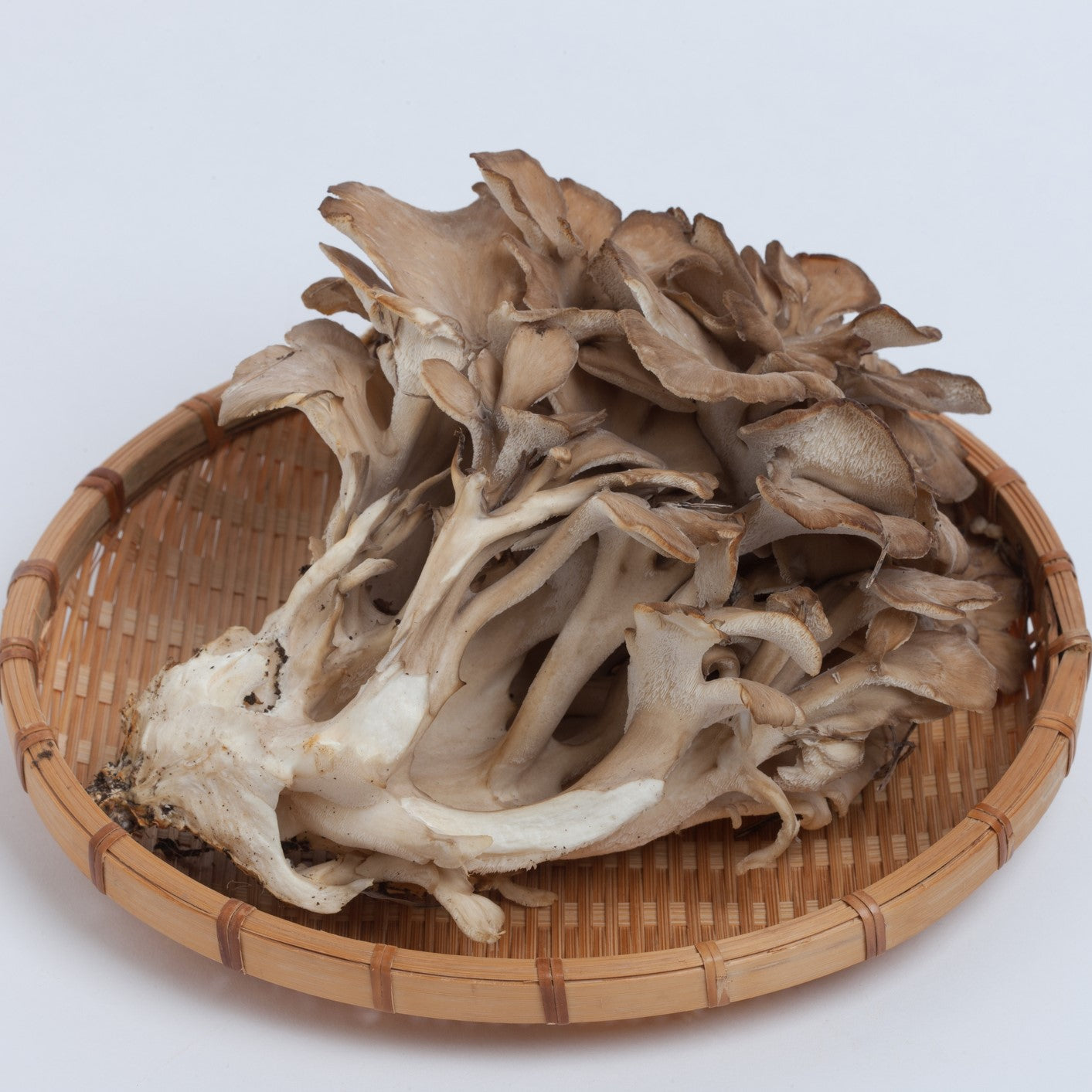
Grifola frondosa, commonly known as Hen of the Woods or Maitake, is a polypore mushroom prized for its culinary and medicinal properties. It grows at the base of trees, particularly oaks, and forms large, clustered fruiting bodies resembling ruffled feathers or a hen sitting on its nest. The mushroom is saprophytic, feeding on decaying wood, and is typically found in the fall. It is edible and highly regarded for its unique flavor and texture.
How to Identify
- Cap
- The caps are typically 2-7 cm wide, fan-shaped, and have wavy or lobed edges. The color ranges from grayish-brown to dark brown. The surface is often wrinkled or finely hairy.
- Gills
- Grifola frondosa is a polypore, so it does not have gills. Instead, it has pores on the underside of the caps. The pores are small, angular, and white to cream-colored.
- Stem
- The stem is branched and sturdy, supporting the cluster of caps. It is typically short and thick, and white to cream-colored.
- Flesh
- The flesh is white and firm, with a slightly chewy texture.
- Fruiting body
- The fruiting body of Grifola frondosa is large and clustered, often weighing several pounds. It consists of multiple fan-shaped caps attached to a central stem.
- Habitat
- Grows at the base of trees, especially oaks, in the fall. It is saprophytic, feeding on decaying wood.
Key Facts
- Cap surfaces: Wrinkled or finely hairy
- Growth Form: Clustered
- Spore Print: White
- Body color: Grayish-brown to dark brown
- Odor: Earthy, nutty
- Flesh bruises: Does not typically bruise
- Height: Up to 60 cm
- Cap Diameter: 2-7 cm (per cap)
- Nutrient gathering: Saprophytic
Safe
SafeGrifola frondosa is generally considered safe to eat for most people. However, as with any wild mushroom, it is essential to properly identify it before consumption. Some individuals may experience allergic reactions or digestive upset. If you are new to eating this mushroom, start with a small amount to see how your body reacts.
Quick Check
- Odor: Earthy and slightly nutty
- Fruiting: Fall
- Substrate: Base of oak trees
Where to Find
North America
Eastern regions of North America, particularly in hardwood forests with oak trees.
Europe
Found in various parts of Europe, often near oak trees.
Asia
Native to parts of Asia, including Japan and China.
Finding Tips
Look for Oak Trees
Focus your search around mature oak trees, as Grifola frondosa has a strong association with them.
Check in the Fall
The mushroom typically fruits in the fall, so plan your foraging trips accordingly.
Examine the Base of Trees
Search at the base of the trees, where the mushroom is most likely to grow.
Similar Species
Black Staining Polypore
Polypore mushroom
Also known as: Blackening Polypore
Scientific Classification
- Phylum
- Basidiomycota
- Class
- Agaricomycetes
- Order
- Polyporales
- Family
- Meripilaceae
- Genus
- Grifola
Storage Information
- Max Temperature: 2°C
- Freezing duration: 3 months
- Min Temperature: -18°C
- Refrigeration: 1 week
How to Clean
Clean Grifola frondosa by brushing off any dirt or debris. Avoid soaking it in water, as it can become waterlogged. A soft brush or damp cloth works well for cleaning the caps and stem.
Explore Hen of the Woods
Identify mushrooms anywhere
Free on iOS, Android, and Web. Photo identification, full database, and your personal collection.