
Got a photo? Identify mushrooms instantly with the Mushby app
Open the appDescription
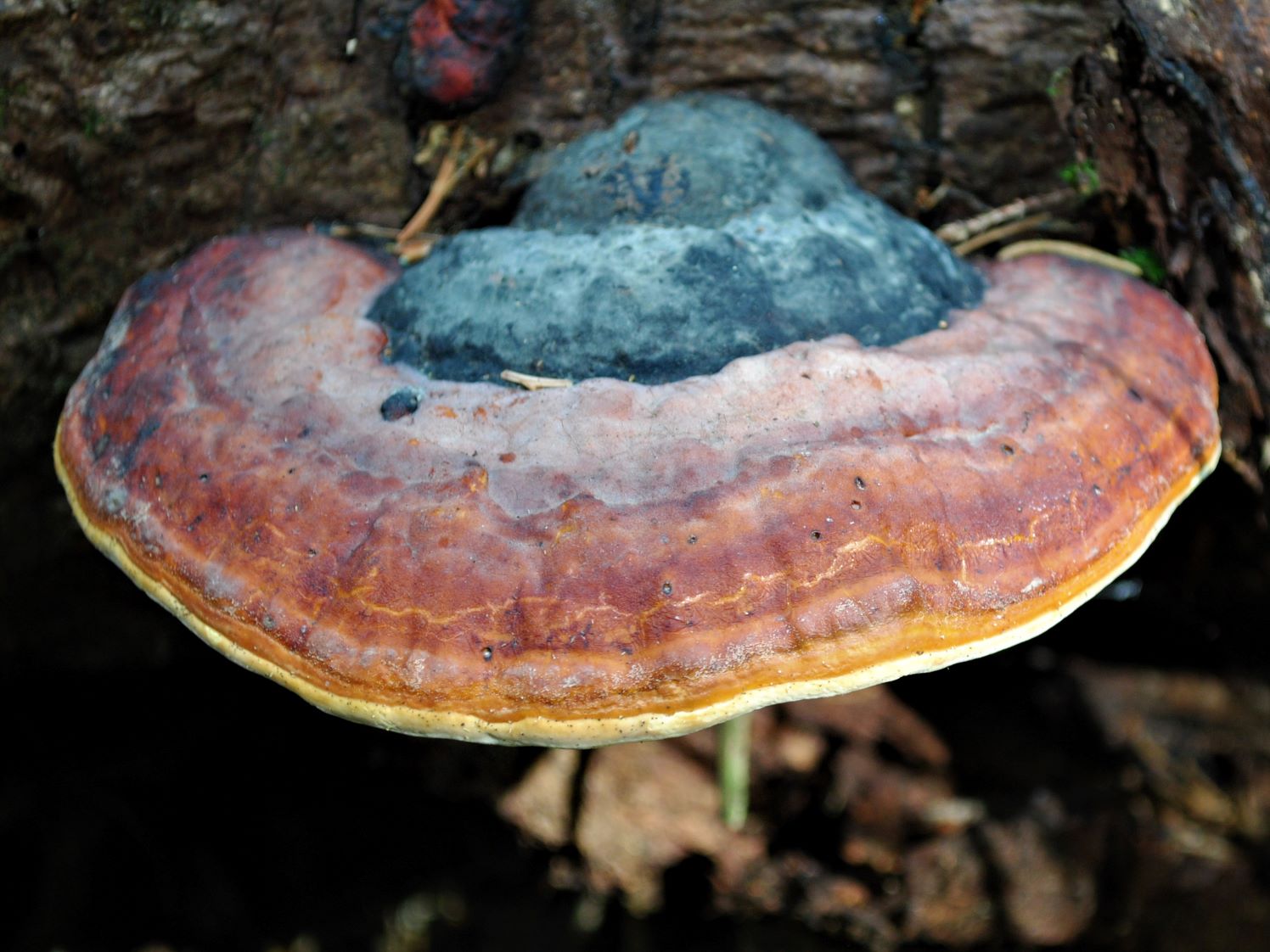
Ganoderma sessile is a polypore mushroom belonging to the Ganodermataceae family. It is characterized by its sessile (lacking a stalk) or very short-stalked attachment to its substrate, and a varnished, often reddish-brown to purplish-black cap. It is a significant white-rot fungus, playing a crucial role in the decomposition of hardwoods.
How to Identify
- Cap
- The cap (pileus) ranges from 5-30 cm (2-12 inches) across and 2-8 cm (0.8-3.1 inches) thick. Its color is highly variable, often starting yellowish-white or pale brown, maturing to reddish-brown, purplish-brown, or almost black, especially towards the base. The margin is typically paler, often white or yellowish, and can be wavy or lobed. The surface is smooth, shiny, and appears as if varnished, often with concentric growth zones.
- Gills
- Ganoderma sessile is a polypore, meaning it has pores instead of gills. The pore surface is white to cream-colored when young, bruising brown when handled. The pores are very small, 4-6 per millimeter, and circular. The tubes are stratified in older specimens, meaning new layers of tubes grow on top of old ones.
- Stem
- Often sessile (lacking a stem) or with a very short, rudimentary, lateral stipe that is also laccate and concolorous with the cap.
- Flesh
- The flesh is tough, corky to woody, and fibrous. It is typically whitish to pale brown, darkening with age. It does not change color significantly when bruised or cut.
- Fruiting body
- The fruiting body is typically fan-shaped, kidney-shaped, or semicircular, often appearing as a shelf-like projection from the host tree. It can be sessile (directly attached) or have a very short, stout stipe. The surface is distinctly laccate (varnished) and shiny.
- Habitat
- Saprobic and parasitic on dead or living hardwoods, particularly oak, maple, elm, and cherry. It causes a white rot. Found growing on stumps, logs, and the bases of living trees.
Key Facts
- Cap surfaces: Laccate (varnished), shiny, smooth, often concentrically zoned.
- Growth Form: Sessile or with a very short, stout lateral stipe, typically shelf-like or fan-shaped.
- Spore Print: Rusty brown.
- Body color: Cap reddish-brown to purplish-black, margin often paler (white to yellowish). Pore surface white to cream, bruising brown.
- Odor: Mild, mushroomy.
- Flesh bruises: Does not bruise significantly; pore surface bruises brown.
- Height: Not applicable for height; grows as a bracket.
- Cap Diameter: 5-30 cm (2-12 inches) across.
- Nutrient gathering: Saprobic and parasitic on hardwoods.
Safe
SafeGanoderma sessile is not considered toxic. However, its woody texture makes it inedible in the traditional sense. It is primarily used for its purported medicinal properties, often prepared as teas, extracts, or tinctures. Always consult with a healthcare professional before using any mushroom for medicinal purposes.
Quick Check
- Odor: Mild, mushroomy, or indistinct.
- Fruiting: Annual, but can persist for several months.
- Substrate: Dead or living hardwoods, causing white rot.
Where to Find
Eastern North America
Widely distributed throughout eastern North America, extending west to the Great Plains.
Southeastern United States
Particularly common in the southeastern United States.
Finding Tips
Host Trees
Focus searches on dead or dying hardwood trees, especially oak, maple, and elm. Look for it growing at the base of living trees or on fallen logs and stumps.
Varnished Appearance
The distinctive shiny, varnished cap surface is a key identifier. This laccate appearance is often more pronounced when fresh and can be wiped clean of dust.
Spore Print
A rusty brown spore print is characteristic of Ganoderma species. This can be obtained by placing a section of the pore surface on a white surface overnight.
Seasonality
While it can be found year-round in some regions, it is most prominent during warmer months, from late spring through fall.
Similar Species
Reishi Mushroom
Bracket Fungus
Also known as: Lingzhi, Ganoderma lucidum
Hemlock Varnish Shelf
Bracket Fungus
Also known as: Ganoderma tsugae
Artist's Conk
Bracket Fungus
Also known as: Ganoderma applanatum
Scientific Classification
- Phylum
- Basidiomycota
- Class
- Agaricomycetes
- Order
- Polyporales
- Family
- Ganodermataceae
- Genus
- Ganoderma
Storage Information
- Max Temperature: 25°C
- Freezing duration: Not applicable for fresh storage; dried mushrooms can last indefinitely.
- Min Temperature: 4°C
- Refrigeration: Fresh specimens are not typically stored for consumption. For medicinal use, fresh specimens can be refrigerated for a few days before processing (drying, tincturing).
How to Clean
Due to its woody texture, Ganoderma sessile is not typically cleaned for culinary purposes. If collected for medicinal use, the fruiting body can be brushed clean of debris. Avoid washing with water as it can absorb moisture and be harder to dry.
Explore Laccate Bracket
Identify mushrooms anywhere
Free on iOS, Android, and Web. Photo identification, full database, and your personal collection.