
Got a photo? Identify mushrooms instantly with the Mushby app
Open the appDescription
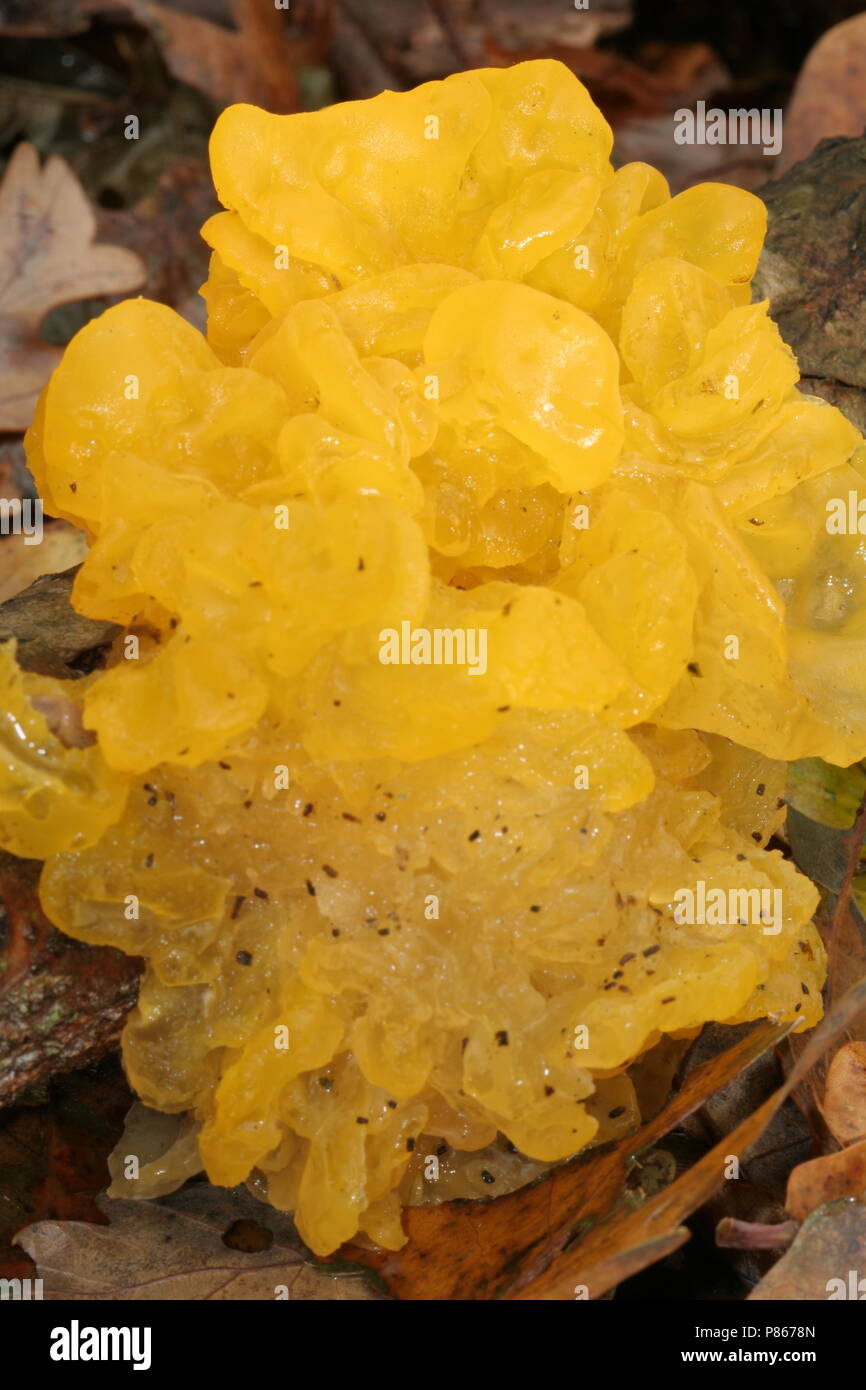
Dacrymyces palmatus, commonly known as Orange Jelly Fungus, is a widespread and common species of jelly fungus. It is characterized by its bright orange to yellowish-orange, gelatinous, and often palmate or brain-like fruit bodies that grow directly on dead wood.
How to Identify
- Cap
- Not applicable, as Dacrymyces palmatus does not have a cap. Its fruit body is a resupinate or cushion-shaped, gelatinous structure.
- Gills
- Not applicable, Dacrymyces palmatus is an ascomycete and does not produce gills.
- Stem
- Dacrymyces palmatus does not have a true stem. It attaches directly to the substrate with a constricted base.
- Flesh
- The flesh is gelatinous, translucent, and rubbery, with no distinct odor or taste.
- Fruiting body
- The fruit bodies are typically 1-6 cm in diameter, cerebriform (brain-like) or convoluted, lobed, or palmately branched. They are bright orange to yellowish-orange, becoming paler and collapsing upon drying, and reviving to their original texture and color when rehydrated. The texture is gelatinous and rubbery.
- Habitat
- Typically found growing on decaying coniferous wood, particularly logs, stumps, and fallen branches. It is a saprobic fungus, aiding in the decomposition of wood.
Key Facts
- Cap surfaces: Not applicable, no cap.
- Growth Form: Cerebriform, lobed, or palmately branched gelatinous masses attached directly to wood.
- Spore Print: White or pale yellowish.
- Body color: Bright orange to yellowish-orange.
- Odor: Indistinguishable.
- Flesh bruises: Does not bruise.
- Height: Not applicable, spreads across substrate.
- Cap Diameter: 1-6 cm in diameter (fruit body size).
- Nutrient gathering: Saprobic (wood decomposer).
Safe
SafeDacrymyces palmatus is generally considered edible, though it has little to no culinary value due to its taste and texture. It is not toxic, but it is recommended to correctly identify it before consumption. There are no known toxic look-alikes that resemble it closely, but general mushroom foraging safety still applies.
Quick Check
- Odor: Indistinguishable
- Fruiting: Year-round in mild climates, especially fall through spring.
- Substrate: Dead coniferous wood
Where to Find
Coniferous Forests
Commonly found in coniferous forests across North America, Europe, and parts of Asia, wherever there is suitable dead conifer wood.
Mixed Forests
Can also be found in mixed forests containing coniferous trees.
Finding Tips
Look for decaying wood
Focus your search on logs, stumps, and fallen branches of coniferous trees, especially in damp conditions.
Seasonal availability
It can be found year-round in mild climates, but is most prolific during periods of high humidity and after rainfall, typically from late autumn through spring.
Moist environments
Prefers damp, shaded areas, which help maintain its gelatinous texture.
Similar Species
Witch's Butter
jely fungus
Also known as: Yellow Witches' Butter, Golden Jelly Fungus
Apricot Jelly
jelly fungus
Also known as: Apricot Jelly Fungus
Scientific Classification
- Phylum
- Basidiomycota
- Class
- Dacrymycetes
- Order
- Dacrymycetales
- Family
- Dacrymycetaceae
- Genus
- Dacrymyces
Storage Information
- Max Temperature: 4°C
- Freezing duration: 6 months
- Min Temperature: 1°C
- Refrigeration: 3-5 days
How to Clean
Gently wipe off any debris with a damp cloth or soft brush. Do not wash extensively as its gelatinous texture can absorb water easily.
Explore Orange Jelly Fungus
Identify mushrooms anywhere
Free on iOS, Android, and Web. Photo identification, full database, and your personal collection.