
Got a photo? Identify mushrooms instantly with the Mushby app
Open the appDescription
Cyanoboletus pulverulentus is a distinctive bolete species renowned for its immediate and intense blue staining when touched or damaged. It is a mycorrhizal fungus that primarily associates with deciduous and coniferous trees.
How to Identify
- Cap
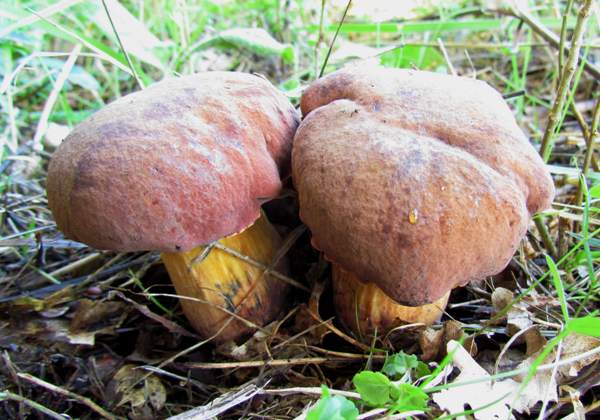
- Convex to flat, 4-12 cm in diameter, brown to reddish-brown, velvety surface.
- Gills
- Pore surface is yellow initially, turning olive-yellow then intensely blue when touched.
- Stem
- Cylindrical, smooth or slightly pruinose, yellow to brown, no reticulation present.
- Flesh
- Yellowish, changing almost instantly to a dark blue or black upon bruising or cutting.
- Fruiting body
- Typical bolete shape with a fleshy cap and spongy pore surface underneath.
- Habitat
- Often found in deciduous or mixed forests, particularly near oak or beech.
Key Facts
- Cap surfaces: Velvety, dry to slightly tacky
- Growth Form: Solitary or small groups
- Spore Print: Olive-brown
- Body color: Brown cap with yellow pores
- Odor: Mild
- Flesh bruises: Instant deep blue/black
- Height: 5 to 12 cm
- Cap Diameter: 4 to 12 cm
- Nutrient gathering: Mycorrhizal
Safe
SafeConsidered edible by some, but generally not highly recommended due to potential for digestive upset in some individuals. Always cook thoroughly.
Quick Check
- Odor: Mild, pleasant, mushroom-like
- Fruiting: Late summer to autumn
- Substrate: Soil in mixed woodlands
Where to Find
Europe
Widely distributed throughout temperate Europe.
North America
Common in many regions, often associated with varied woodland types.
Finding Tips
Staining Check
Gently scratch the pore surface; if it turns deep blue almost instantly, it is a primary indicator.
Seasonality
Look for these in late summer through autumn after periods of rain.
Similar Species
Neoboletus luridiformis
Boletaceae
Also known as: Scarletina Bolete
Suillellus luridus
Boletaceae
Also known as: Lurid Bolete
Scientific Classification
- Phylum
- Basidiomycota
- Class
- Agaricomycetes
- Order
- Boletales
- Family
- Boletaceae
- Genus
- Cyanoboletus
Storage Information
- Max Temperature: 4°C
- Freezing duration: Up to 6 months if blanched/dried
- Min Temperature: 0°C
- Refrigeration: 3 to 5 days in a paper bag
How to Clean
Gently brush off soil and debris with a soft-bristled brush. Trim the base of the stem. Avoid soaking in water as the flesh is porous and can become mushy.
Explore Blue-staining Bolete
Identify mushrooms anywhere
Free on iOS, Android, and Web. Photo identification, full database, and your personal collection.