
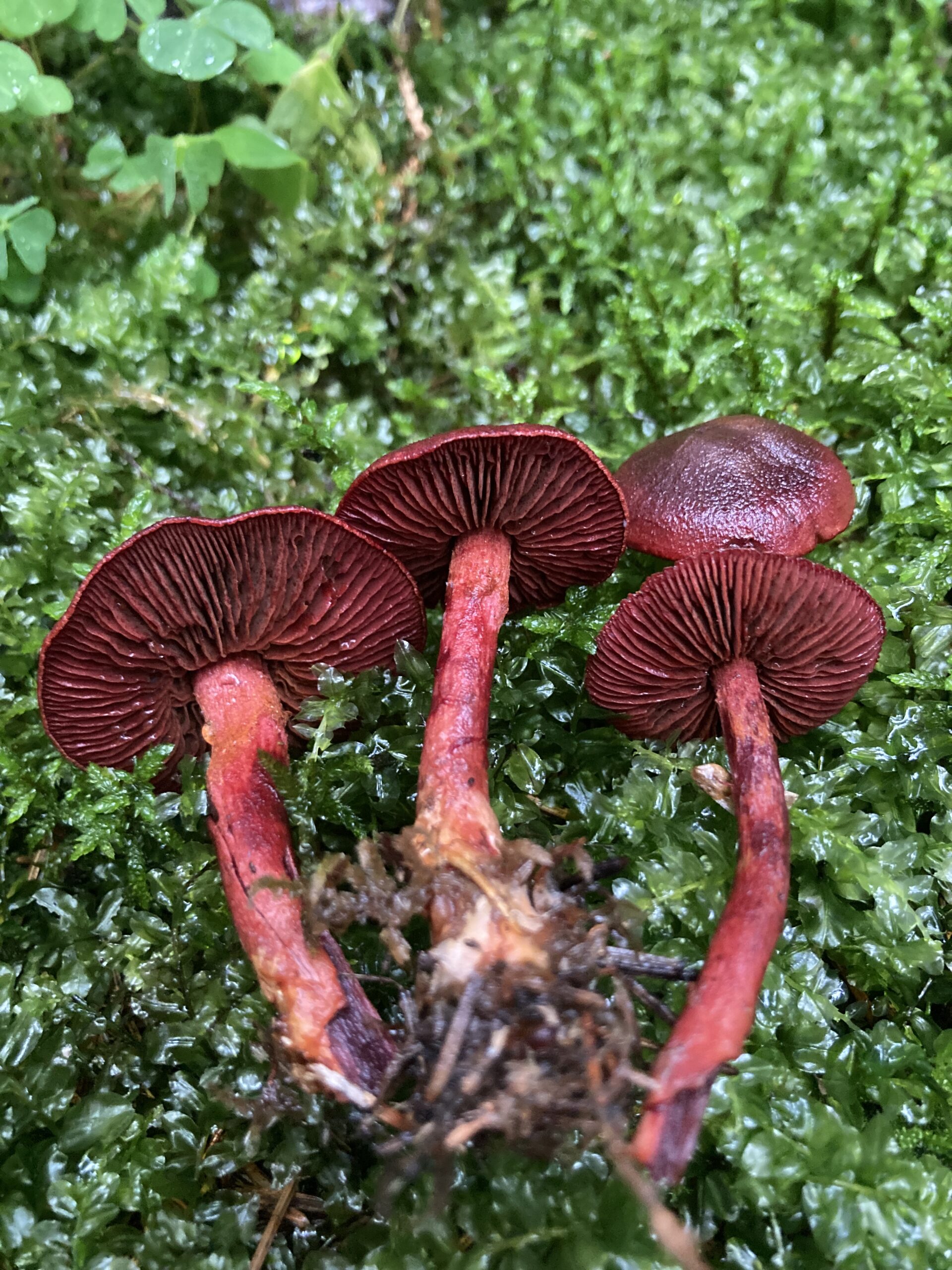
How to identify Deadly webcap
Cortinarius rubellus
Got a photo? Identify mushrooms instantly with the Mushby app
Open the appTo correctly identify Deadly webcap (Cortinarius rubellus), check each of these features in order. Misidentification is the most common cause of mushroom poisoning, so cross-reference multiple sources.
Step-by-step identification
- 1
Cap
Shape, color, surface texture, and diameter.
3-8 cm diameter, convex to conical, often with a distinct central umbo, surface dry and fibrillose.
- 2
Gills
Attachment to stem, color, and spacing.
Adnate to adnexed, distant, broad, rusty-brown when mature due to spore deposition.
- 3
Stem
Length, shape, surface, and any ring.
4-10 cm long, 0.5-1.5 cm thick, cylindrical or slightly tapering, yellowish with paler horizontal bands (remnants of the partial veil).
- 4
Flesh
Color, texture, and bruising reaction.
Yellowish to orange-brown, thin, with no distinctive taste.
- 5
Fruiting body
Overall growth pattern.
Medium-sized agaric with a characteristic rusty-red to orange-brown appearance.
- 6
Habitat
Where it grows and on what substrate.
Exclusively associated with coniferous trees, particularly spruce, in damp, mossy habitats.
Key Facts
- Cap surfaces
- Dry, fibrillose, slightly scaly.
- Growth Form
- Solitary to gregarious.
- Spore Print
- Rusty brown.
- Body color
- Orange-brown to reddish-brown.
- Odor
- Mild, nondescript.
- Flesh bruises
- Does not change color significantly.
- Height
- 4-10 cm.
- Cap Diameter
- 3-8 cm.
Fruit body characteristics
- Gill attachment: Adnate to broadly adnate.
- Stem shape: Cylindrical, sometimes slightly swollen at the base.
- Stem surface: Fibrous with pale yellow, persistent veil bands.
- Ring: Evanescent annular zone rather than a true ring.
- Stem cross-section: Solid, homogeneous.
Explore Deadly webcap
Identify mushrooms anywhere
Free on iOS, Android, and Web. Photo identification, full database, and your personal collection.