
Got a photo? Identify mushrooms instantly with the Mushby app
Open the appDescription
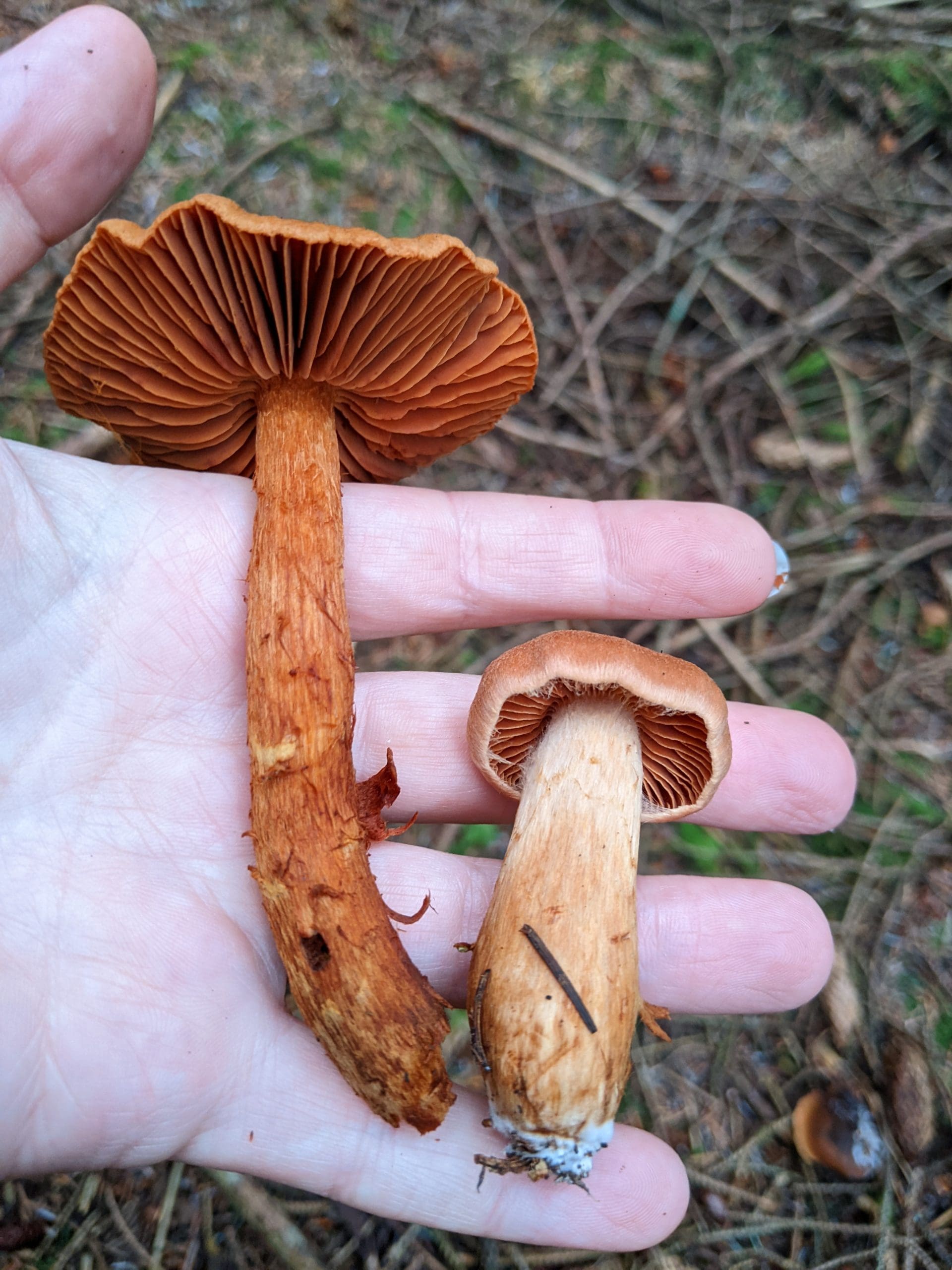
Cortinarius croceus is a species of mushroom in the family Cortinariaceae. It is a fairly common mushroom found in deciduous woodlands in Europe and North America. The cap is typically 2-5 cm in diameter, and is a tawny-brown color. It is covered in a fine, velvety layer of hairs, and has a slightly sticky surface. The stem is usually 3-7 cm tall, and is the same color as the cap. It is covered in a dense network of cobweb-like strands called a cortina, which often breaks down into a rusty-brown ring on the stem. The gills are attached to the stem and are crowded and narrow. They are initially a pale brown color, but become darker with age.
How to Identify
- Cap
- The cap is typically 2-5 cm in diameter, and is a tawny-brown color. It is covered in a fine, velvety layer of hairs, and has a slightly sticky surface.
- Gills
- The gills of Cortinarius croceus are attached to the stem and are crowded and narrow. They are initially a pale brown color, but become darker with age.
- Stem
- The stem is usually 3-7 cm tall, and is the same color as the cap. It is covered in a dense network of cobweb-like strands called a cortina, which often breaks down into a rusty-brown ring on the stem.
- Flesh
- The flesh of this mushroom is white, and has a slightly bitter taste. It is not recommended to eat this mushroom, as it is considered to be toxic.
- Fruiting body
- Cortinarius croceus is a mushroom with a cap, gills, and stem.
- Habitat
- Cortinarius croceus is a fairly common mushroom found in deciduous woodlands in Europe and North America. It is often found growing in groups, or even clusters, near the bases of trees.
Key Facts
- Cap surfaces: Fibrous, Sticky
- Growth Form: Solitary, Clustered
- Spore Print: Rusty-brown
- Body color: Brown, Yellow
- Odor: Mild
- Flesh bruises: No
- Height: 3-7 cm
- Cap Diameter: 2-5 cm
- Nutrient gathering: Saprobic
Toxic
Severe ToxicityCortinarius croceus is considered to be toxic and can cause severe gastrointestinal upset, including nausea, vomiting, and diarrhea. Symptoms may appear within 1-6 hours after ingestion. The toxin responsible for the toxicity of this mushroom is unknown. It is important to avoid eating any mushrooms you are unsure about.
Quick Check
- Odor: Mild
- Fruiting: Deciduous woodland
- Substrate: Ground, Wood
Where to Find
Deciduous Woodlands
It is a fairly common mushroom found in deciduous woodlands in Europe and North America.
Finding Tips
Finding Cortinarius croceus
Cortinarius croceus is a fairly common mushroom found in deciduous woodlands. It is often found growing in groups, or even clusters, near the bases of trees. The cap of this species is usually 2-5 cm in diameter and is covered in a fine, velvety layer of hairs. The stem is usually 3-7 cm tall and is the same color as the cap.
Similar Species
Cortinarius anomalus
Cortinarius
Also known as: Cortinarius anomalus
Scientific Classification
- Phylum
- Basidiomycota
- Class
- Agaricomycetes
- Order
- Agaricales
- Family
- Cortinariaceae
- Genus
- Cortinarius
Explore Tawny Webcap, Golden Webcap
Identify mushrooms anywhere
Free on iOS, Android, and Web. Photo identification, full database, and your personal collection.