
Got a photo? Identify mushrooms instantly with the Mushby app
Open the appDescription
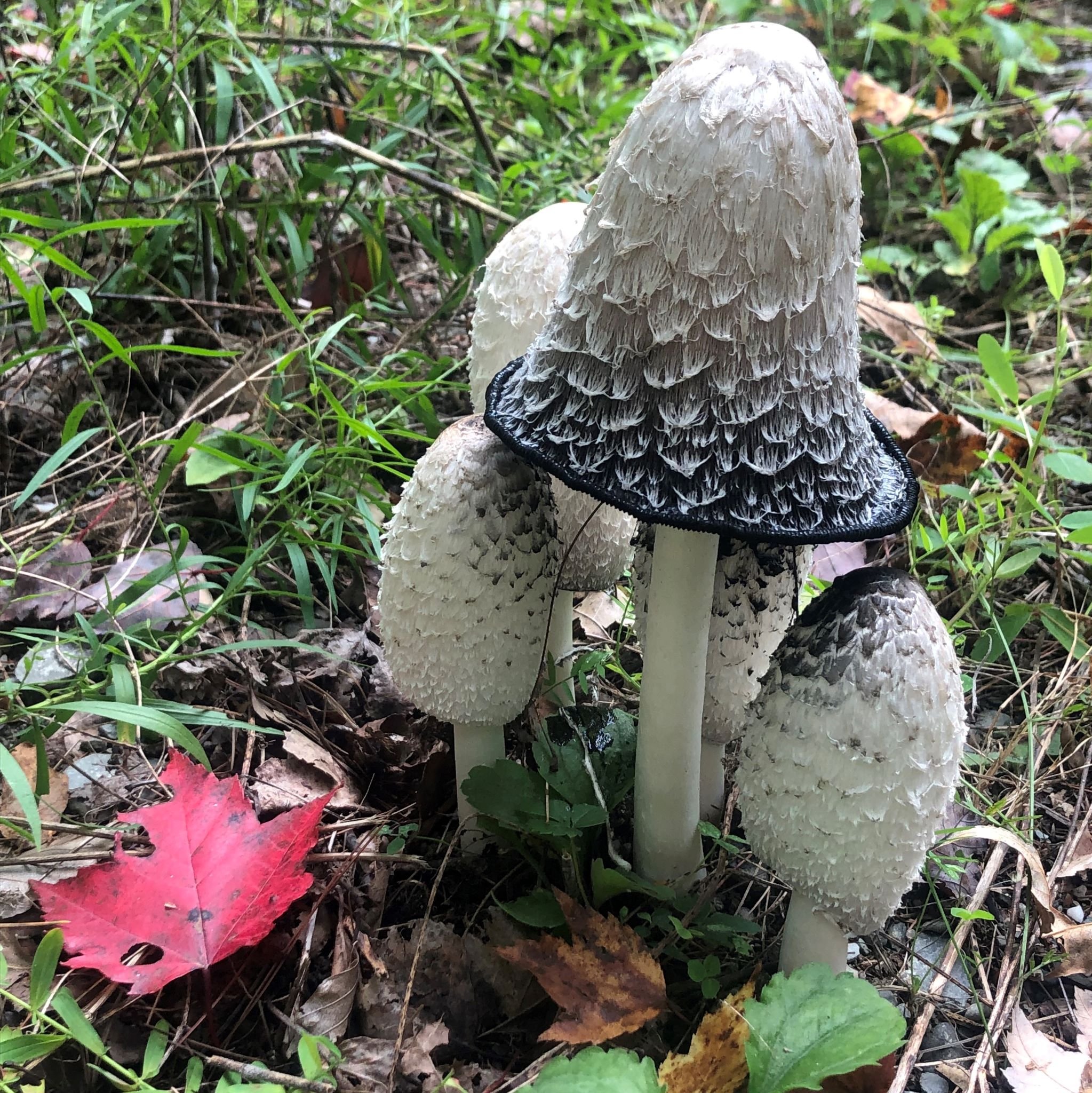
The Scaly Inky Cap, Coprinopsis variegata (formerly Coprinus variegatus), is a distinctive mushroom characterized by its grayish-brown cap covered with prominent, shaggy to woolly white to brownish scales. Like many 'inky cap' species, its gills undergo deliquescence, turning black and dissolving into an inky liquid as the spores mature. It is a saprobic fungus, playing a crucial role in nutrient cycling by decomposing woody debris. This species is toxic due to the presence of coprine, which causes an Antabuse-like reaction when consumed with alcohol.
How to Identify
- Cap
- Conic to oval when young, expanding to campanulate (bell-shaped) or convex with age, but rarely fully flattening. The cap measures 3-10 cm in diameter. The surface is grayish-brown to tan, densely covered with conspicuous, shaggy to woolly, white to brownish scales or patches, especially when young. These scales are remnants of the universal veil. The margin is often striate and may split with age. Deliquescence occurs from the margin inwards.
- Gills
- Free, crowded. Initially white or pale cream, then turning pinkish-gray, subsequently blackening, and ultimately deliquescing into a black, inky liquid from the margin upwards.
- Stem
- Typically 6-15 cm long and 0.5-1.5 cm thick, central, hollow, and fragile. It is whitish to pale brownish, sometimes slightly fibrillose, and typically lacks scales. A small, often inconspicuous ring or ring zone, sometimes breaking off, may be present from the partial veil.
- Flesh
- Thin, fragile, and whitish to pale grayish. It darkens and deliquesces rapidly with maturity.
- Fruiting body
- The fruiting body undergoes a process of deliquescence, where the gills and cap dissolve into a black, inky liquid as spores mature.
- Habitat
- Saprobic, growing on decaying hardwood logs, stumps, buried wood, or wood chips. Often found in clusters or singly in deciduous or mixed hardwood forests, parks, and disturbed areas.
Key Facts
- Cap surfaces: Grayish-brown to tan, covered with shaggy to woolly white to brownish scales.
- Growth Form: Usually scattered or gregarious (in clusters) on decaying wood.
- Spore Print: Black.
- Body color: Overall grayish-brown with white scales on the cap when young; turning black with age due to deliquescence.
- Odor: Indistinct.
- Flesh bruises: Not notably bruising; it darkens and deliquesces with maturity.
- Height: 6-15 cm
- Cap Diameter: 3-10 cm
- Nutrient gathering: Saprobic
Toxic
Severe ToxicityCoprinopsis variegata is considered toxic due to the presence of coprine. This compound interferes with the body's ability to metabolize alcohol, leading to a strong Antabuse-like reaction. Symptoms typically appear within 30 minutes to 3 hours after consuming alcohol with the mushroom and can include flushing of the face and neck, tingling sensations in the limbs, metallic taste, nausea, vomiting, dizziness, palpitations, and in severe cases, hypotension. The reaction can occur up to several days after mushroom consumption if alcohol is ingested.
Quick Check
- Odor: Indistinct or slightly mushroomy, not strong or distinctive.
- Fruiting: Late spring to late fall.
- Substrate: Decaying hardwood logs, stumps, buried wood, wood chips.
Where to Find
North America
Widely distributed throughout eastern and central North America, extending westward to the Rocky Mountains.
Europe
Also reported in parts of Europe, though less common than in North America.
Japan
Has been documented in certain regions of Japan.
Finding Tips
Look for Woody Debris
Primarily search in areas with decaying hardwood logs, stumps, buried wood, or wood chips, particularly in deciduous or mixed forests.
Seasonal Timing
This mushroom typically fruits from late spring through fall, adapting to periods of adequate moisture.
Examine Cap Scales
The prominent, shaggy white to brownish scales on the cap are a key identification feature. Look for these on young to mature specimens.
Observe Deliquescence
Mature specimens will show signs of the gills and cap edges turning black and dissolving into an inky liquid.
Similar Species
Shaggy Mane
Coprinus comatus
Also known as: Lawyer's Wig
Magpie Inkcap
Coprinopsis picacea
Also known as: Magpie Mushroom
Glistening Inkcap
Coprinopsis atramentaria
Also known as: Tippler's Bane
Scientific Classification
- Phylum
- Basidiomycota
- Class
- Agaricomycetes
- Order
- Agaricales
- Family
- Psathyrellaceae
- Genus
- Coprinopsis
Explore Scaly Inky Cap
Identify mushrooms anywhere
Free on iOS, Android, and Web. Photo identification, full database, and your personal collection.