
Got a photo? Identify mushrooms instantly with the Mushby app
Open the appDescription
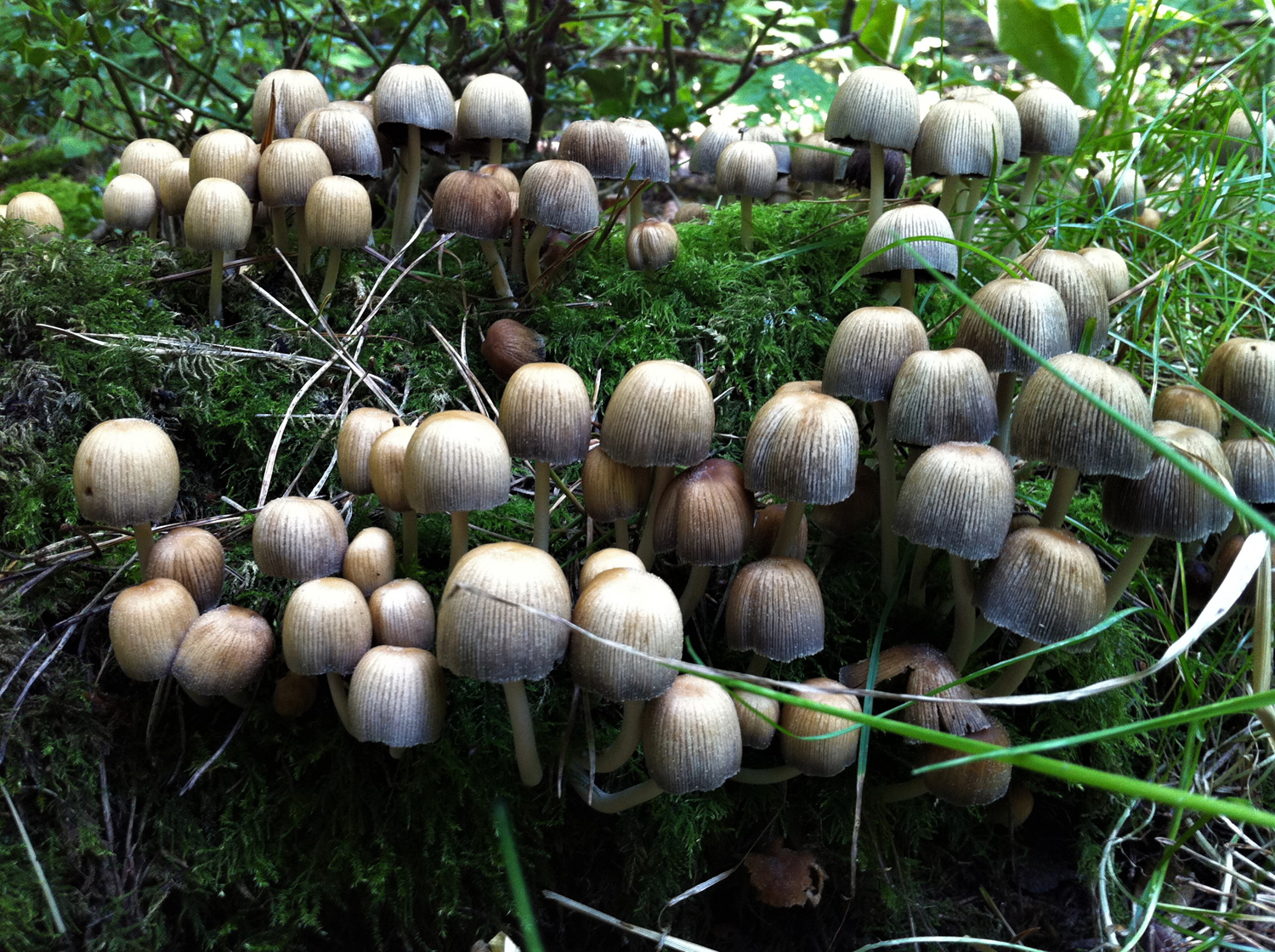
Coprinellus micaceus, commonly known as the Glistening Inkcap, is a saprophytic mushroom that is very common in urban areas. It is characterized by its small, bell-shaped cap covered with glistening particles, which are remnants of the universal veil. As the mushroom matures, the cap deliquesces (dissolves into a black, inky fluid), a process typical of inkcaps. It is not considered poisonous but is not recommended for consumption due to its small size and the potential for confusion with toxic species.
How to Identify
- Cap
- The cap is small, typically 1-3 cm in diameter, bell-shaped, and covered with glistening, mica-like particles when young. The color ranges from tan to ochraceous, fading to gray as it matures. The cap margin is often striate.
- Gills
- The gills are crowded, free, and white when young, turning black as they mature and deliquesce.
- Stem
- The stem is slender, hollow, and white, typically 3-7 cm long and 2-4 mm thick. It is fragile and lacks a ring or volva.
- Flesh
- The flesh is thin and fragile, with a pale color.
- Fruiting body
- The fruiting body is small and fragile, initially bell-shaped, becoming more convex with age. It deliquesces quickly.
- Habitat
- Grows in clusters on decaying wood, often near stumps or buried roots, in urban areas, gardens, and parks. It is commonly found after rain.
Key Facts
- Cap surfaces: Covered with glistening particles when young.
- Growth Form: Clustered.
- Spore Print: Black.
- Body color: Tan to ochraceous, fading to gray.
- Odor: Mild.
- Flesh bruises: Does not bruise.
- Height: 3-7 cm.
- Cap Diameter: 1-3 cm.
- Nutrient gathering: Saprophytic.
Safe
SafeCoprinellus micaceus is not considered poisonous, but consumption is not recommended due to its small size and the risk of misidentification with toxic species.
Quick Check
- Odor: Mild or indistinct.
- Fruiting: Grows in dense clusters.
- Substrate: Decaying wood.
Where to Find
Urban Areas
Common in gardens, parks, and disturbed ground in cities and towns.
Woody Debris
Found growing on or near decaying hardwood, stumps, and buried roots.
Finding Tips
Look After Rain
Glistening Inkcaps often appear after periods of rain due to their need for moisture to fruit.
Check Woody Areas
Inspect areas with decaying wood, such as old stumps or buried roots, especially in urban environments.
Similar Species
Coprinopsis atramentaria
mushroom
Also known as: Common Ink Cap, Inky Cap
Parasola plicatilis
mushroom
Also known as: Pleated Inkcap
Scientific Classification
- Phylum
- Basidiomycota
- Class
- Agaricomycetes
- Order
- Agaricales
- Family
- Psathyrellaceae
- Genus
- Coprinellus
Storage Information
- Max Temperature: N/A
- Freezing duration: N/A
- Min Temperature: N/A
- Refrigeration: N/A
How to Clean
Cleaning is generally not necessary as these mushrooms are typically not consumed. If desired, gently brush off any debris.
Explore Glistening Inkcap
Identify mushrooms anywhere
Free on iOS, Android, and Web. Photo identification, full database, and your personal collection.