
Got a photo? Identify mushrooms instantly with the Mushby app
Open the appDescription
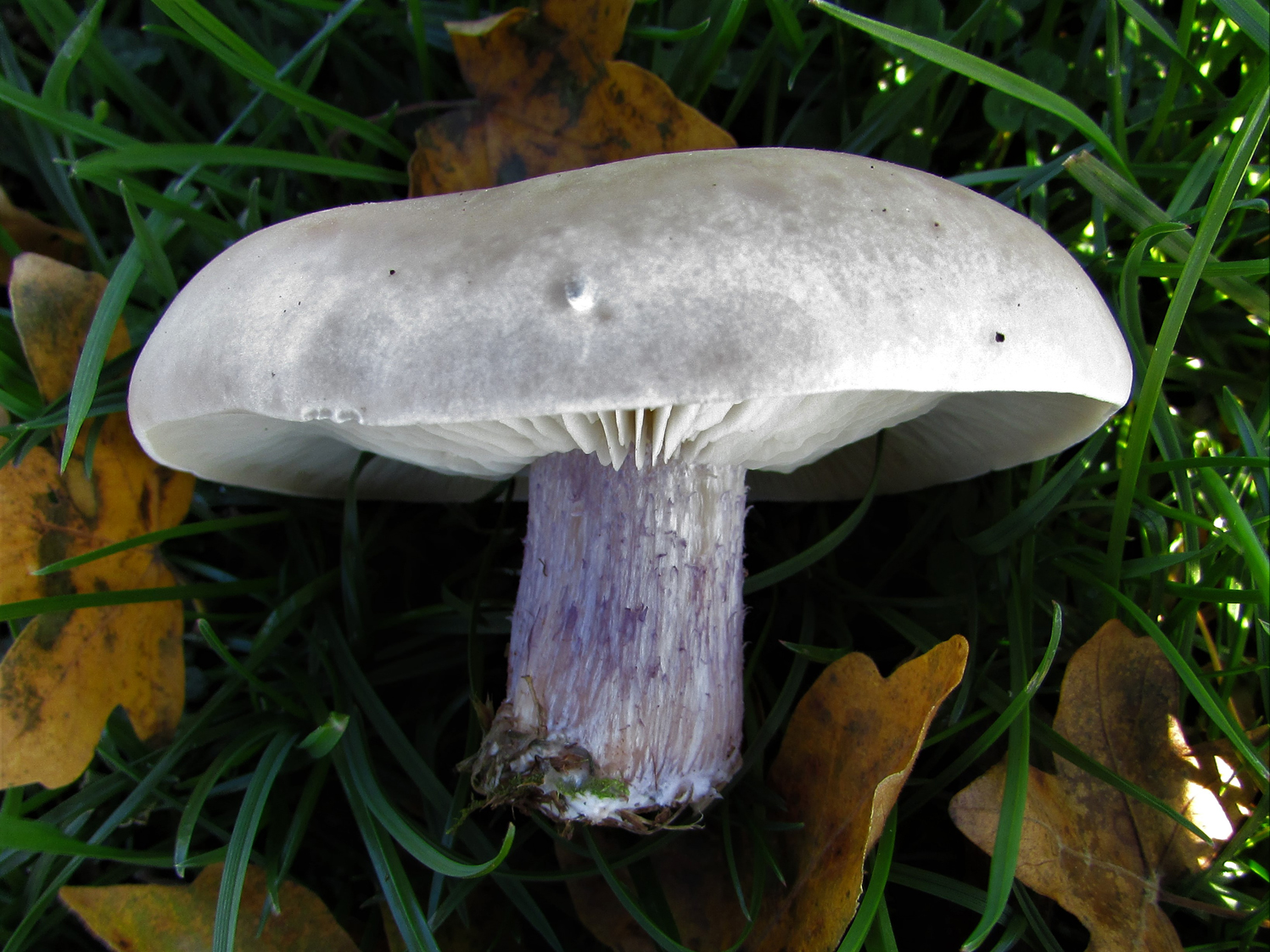
The Field Blewit, scientifically known as Clitocybe saeva (formerly Lepista saeva), is a highly regarded edible mushroom, particularly in Europe. It is characterized by its distinctive violet-blue stem and pale, often buff to cream-colored cap. Unlike its close relative, the Wood Blewit (Clitocybe nuda), the Field Blewit typically grows in grassy areas, often in rings or scattered groups, and lacks the strong perfumed odor of the Wood Blewit. It is a saprobic species, deriving nutrients from decaying organic matter in the soil.
How to Identify
- Cap
- 5-15 cm in diameter, convex to plano-convex, becoming flattened or slightly depressed with age, sometimes with a wavy margin. The color ranges from buff, cream, or pale tan to yellowish-brown, often with a slightly greasy or moist feel when young, becoming dry. The margin is often inrolled when young.
- Gills
- Adnexed to sinuate, crowded, and relatively narrow. Color is initially whitish to pale cream, becoming buff or pinkish-buff with age due to spore development. They are not typically violet like the stem.
- Stem
- 5-10 cm long and 1-3 cm thick, robust, cylindrical or slightly club-shaped, often swollen towards the base. The most distinctive feature is its vibrant violet-blue to lilac-purple color, especially when young, fading somewhat with age. The surface is smooth or finely fibrillose, and it lacks a ring. The base often has white mycelial threads.
- Flesh
- Thick, firm, and whitish to pale cream, sometimes with a faint purplish tinge near the stem. It has a mild, pleasant taste and a faint, slightly mealy or earthy odor.
- Fruiting body
- Medium to large agaric mushroom, typically growing in troops, rings, or scattered.
- Habitat
- Saprobic, growing terrestrially in grassy areas, pastures, meadows, parks, and lawns, often at the edges of woodlands. It prefers nutrient-rich, disturbed soils and is frequently found in fairy rings.
Key Facts
- Cap surfaces: Smooth, dry to slightly greasy, often buff to cream.
- Growth Form: Gregarious, often in rings or scattered groups.
- Spore Print: Pinkish-buff to pale flesh-colored.
- Body color: Cap: buff to cream; Stem: violet-blue.
- Odor: Faintly mealy or earthy.
- Flesh bruises: Does not bruise significantly.
- Height: 5-10 cm
- Cap Diameter: 5-15 cm
- Nutrient gathering: Saprobic
Safe
SafeClitocybe saeva is considered a good edible mushroom when properly identified and cooked. However, it is crucial to be absolutely certain of identification due to potentially toxic look-alikes. Some individuals may experience mild gastrointestinal upset if consumed raw or insufficiently cooked. Always cook thoroughly.
Quick Check
- Odor: Faintly mealy or earthy, not strongly perfumed.
- Fruiting: Late autumn to early winter.
- Substrate: Terrestrial, in grassy areas, pastures, and lawns.
Where to Find
Europe
Widespread across temperate regions of Europe, particularly common in the UK, France, and Germany.
North America
Less common but reported in parts of North America, though often confused with other species.
Finding Tips
Habitat Preference
Look in grassy areas, pastures, and lawns, especially where there's decaying organic matter. They often grow in rings or scattered groups.
Seasonal Availability
Typically fruits in late autumn, from September to November, sometimes extending into early winter in milder climates.
Distinguishing Features
Focus on the combination of the pale cap, vibrant violet-blue stem, and growth in grassy habitats. Always check the spore print (pinkish-buff).
Similar Species
Wood Blewit
Clitocybe
Also known as: Lepista nuda, Rhodopaxillus nudus
Purple Cortinar
Cortinarius
Also known as: Cortinarius violaceus
Deadly Fibrecap
Inocybe
Also known as: Inocybe erubescens, Inocybe patouillardii
Scientific Classification
- Phylum
- Basidiomycota
- Class
- Agaricomycetes
- Order
- Agaricales
- Family
- Tricholomataceae
- Genus
- Clitocybe
Storage Information
- Max Temperature: 4°C
- Freezing duration: 6 months
- Min Temperature: 0°C
- Refrigeration: 5 days
How to Clean
Gently brush off any soil or debris with a soft brush or damp cloth. Avoid washing under running water as mushrooms can absorb excess moisture. Trim off any damaged or insect-infested parts.
Explore Field Blewit
Identify mushrooms anywhere
Free on iOS, Android, and Web. Photo identification, full database, and your personal collection.