
Got a photo? Identify mushrooms instantly with the Mushby app
Open the appDescription
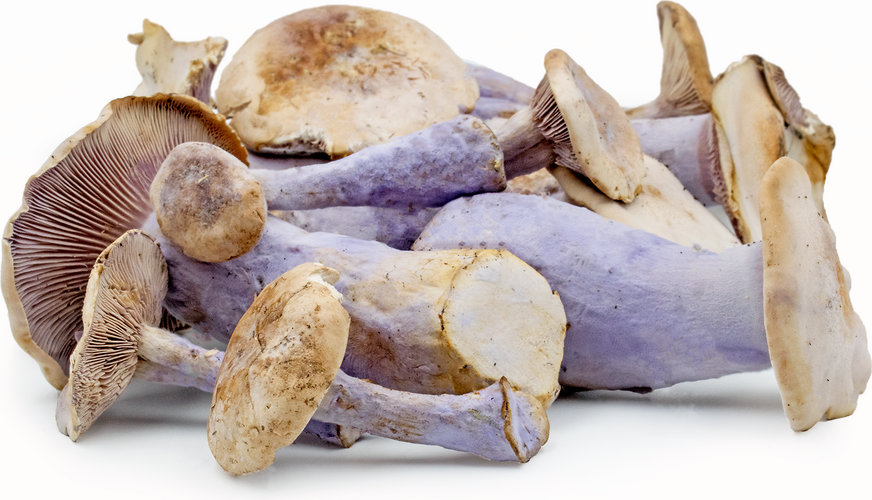
Clitocybe nuda, commonly known as the wood blewit, is a saprophytic mushroom found in both coniferous and deciduous woodlands. It is characterized by its lilac to purple color, which fades as it matures. The mushroom is edible, but caution is advised due to potential confusion with toxic look-alikes.
How to Identify
- Cap
- The cap is initially convex, later flattening out and sometimes developing a shallow depression. The color is typically lilac or purple when young, fading to tan or brownish with age. The surface is smooth and slightly greasy when moist.
- Gills
- The gills are crowded, adnate to slightly decurrent, and lilac in color when young, fading to a pale tan or brownish. They are easily separable from the cap.
- Stem
- The stem is stout, fibrous, and typically the same color as the cap or slightly paler. It measures 5 to 10 cm in length and 1 to 2 cm in diameter. The base of the stem often has a cottony or hairy texture.
- Flesh
- The flesh is thick and has a lilac tint, especially in the cap. It has a mild, sweet odor and taste.
- Fruiting body
- The fruiting body of Clitocybe nuda is typically medium to large in size, with a cap diameter ranging from 5 to 15 cm. The overall appearance is fleshy and substantial.
- Habitat
- Clitocybe nuda is found in both coniferous and deciduous woodlands, often in leaf litter or compost. It fruits in the fall and early winter.
Key Facts
- Cap surfaces: Smooth, slightly greasy when moist
- Growth Form: Saprophytic
- Spore Print: Pinkish-buff
- Body color: Lilac to purple, fading to tan or brownish
- Odor: Mild, sweet
- Flesh bruises: No significant bruising
- Height: 5-10 cm
- Cap Diameter: 5-15 cm
- Nutrient gathering: Saprophytic
Safe
Mild ToxicityClitocybe nuda is considered edible, but it can be confused with poisonous species, such as Cortinarius species, which contain orellanine. Thorough identification is crucial.
Quick Check
- Odor: Mild, sweet, or fruity
- Fruiting: Autumn to early winter
- Substrate: Leaf litter, compost, or decaying wood
Where to Find
North America
Found in woodlands across the continent, particularly in areas with rich leaf litter.
Europe
Common in European woodlands, especially in areas with beech and oak trees.
Finding Tips
Look in Leaf Litter
Search in areas with deep leaf litter, especially under deciduous trees.
Check Compost Piles
They can also be found in compost piles and other areas with decaying organic matter.
Similar Species
Lilac Bonnet
poisonous mushroom
Also known as: Mycena pura
Scientific Classification
- Phylum
- Basidiomycota
- Class
- Agaricomycetes
- Order
- Agaricales
- Family
- Tricholomataceae
- Genus
- Clitocybe
Storage Information
- Max Temperature: 2
- Freezing duration: 3 months
- Min Temperature: -18
- Refrigeration: 3-4 days
How to Clean
Clean the mushrooms by brushing off any dirt or debris. Avoid soaking them in water, as they can become waterlogged. A soft brush or damp cloth works best.
Explore Wood blewit
Identify mushrooms anywhere
Free on iOS, Android, and Web. Photo identification, full database, and your personal collection.