
Got a photo? Identify mushrooms instantly with the Mushby app
Open the appDescription
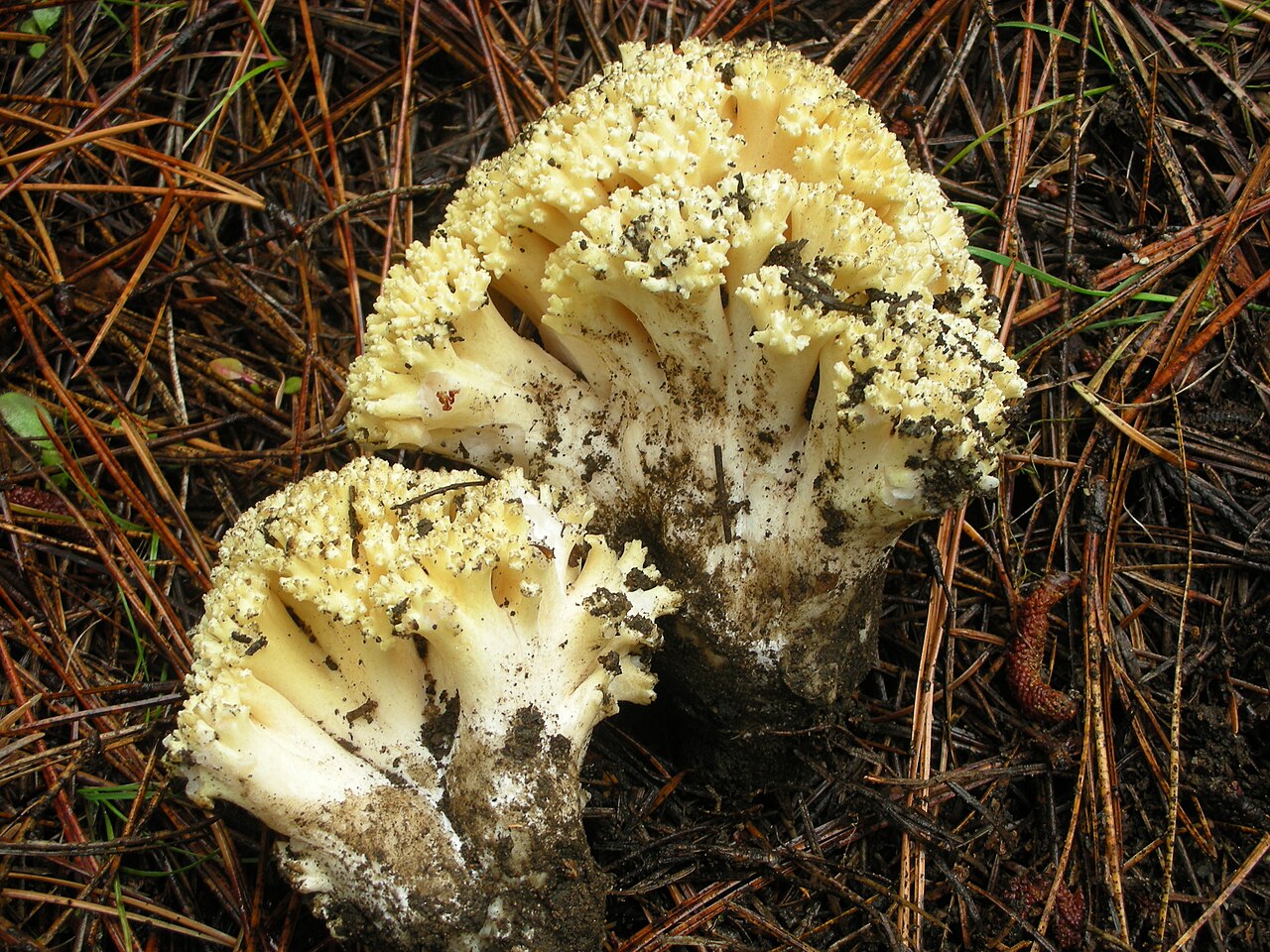
Clavulina coralloides, commonly known as the White Spindly Coral or Crested Coral, is a distinctive coral fungus characterized by its white to cream-colored, highly branched fruiting body. It typically grows on the ground in woodlands, often among moss or leaf litter. Its intricate, coral-like structure makes it easily recognizable, though it can be confused with other white coral fungi.
How to Identify
- Cap
- Not applicable, as this is a coral fungus and does not have a distinct cap.
- Gills
- Not applicable, as this is a coral fungus and does not have gills.
- Stem
- The base of the fruiting body is often a short, indistinct, common stalk that branches almost immediately from the substrate. It is concolorous with the branches.
- Flesh
- The flesh is white, brittle, and lacks a distinctive odor or taste.
- Fruiting body
- The fruiting body is erect, highly branched, and coral-like, typically 2-10 cm tall and 2-8 cm wide. It is white to cream-colored, sometimes with yellowish or grayish tints, especially with age or bruising. The branches are slender, often flattened, and terminate in blunt, crested, or comb-like tips. The texture is brittle when fresh, becoming more fragile when dry.
- Habitat
- Saprobic, growing on the ground, often among moss, leaf litter, or on well-rotted wood in coniferous and mixed forests. It can be found solitarily or in scattered groups.
Key Facts
- Cap surfaces: Not applicable
- Growth Form: Coral-like, branched
- Spore Print: White
- Body color: White to cream, sometimes yellowish or grayish
- Odor: Indistinct
- Flesh bruises: Does not bruise significantly, may yellow slightly with age
- Height: 2-10 cm
- Cap Diameter: Not applicable
- Nutrient gathering: Saprobic
Safe
SafeClavulina coralloides is generally considered edible, but its edibility is often described as poor due to its bland taste and somewhat tough or rubbery texture. There are no known toxins associated with this species. However, as with all wild mushrooms, proper identification is crucial to avoid confusion with potentially toxic look-alikes. Some individuals may experience mild gastrointestinal upset if consumed in large quantities or if not thoroughly cooked.
Quick Check
- Odor: Indistinct
- Fruiting: Late summer to autumn
- Substrate: Ground, leaf litter, well-rotted wood
Where to Find
North America
Widely distributed across North America, particularly common in eastern and western regions.
Europe
Common throughout Europe, found in various forest types.
Asia
Reported in parts of Asia, though less extensively documented than in North America and Europe.
Finding Tips
Forest Floor Search
Look on the forest floor, especially in areas with abundant leaf litter, moss, or decaying wood. It prefers moist, shaded environments.
Coniferous and Mixed Forests
While it can be found in various forest types, it is particularly common in coniferous and mixed woodlands.
Seasonal Timing
Typically fruits from late summer through autumn, depending on local climate and rainfall.
Similar Species
White Worm Coral
Clavaria
Also known as: White Spindle Coral
Crown-tipped Coral
Clavicorona
Also known as: Crown Coral
Elegant Coral
Ramaria
Also known as: Yellow-tipped Coral
Scientific Classification
- Phylum
- Basidiomycota
- Class
- Agaricomycetes
- Order
- Cantharellales
- Family
- Clavulinaceae
- Genus
- Clavulina
Storage Information
- Max Temperature: 4°C
- Freezing duration: 6 months
- Min Temperature: 0°C
- Refrigeration: 3 days
How to Clean
Due to its delicate and branched structure, Clavulina coralloides can be difficult to clean thoroughly. Gently brush off any debris with a soft brush or cloth. Avoid washing with water, as it can become waterlogged and lose its texture.
Explore White Spindly Coral
Identify mushrooms anywhere
Free on iOS, Android, and Web. Photo identification, full database, and your personal collection.