
Got a photo? Identify mushrooms instantly with the Mushby app
Open the appDescription
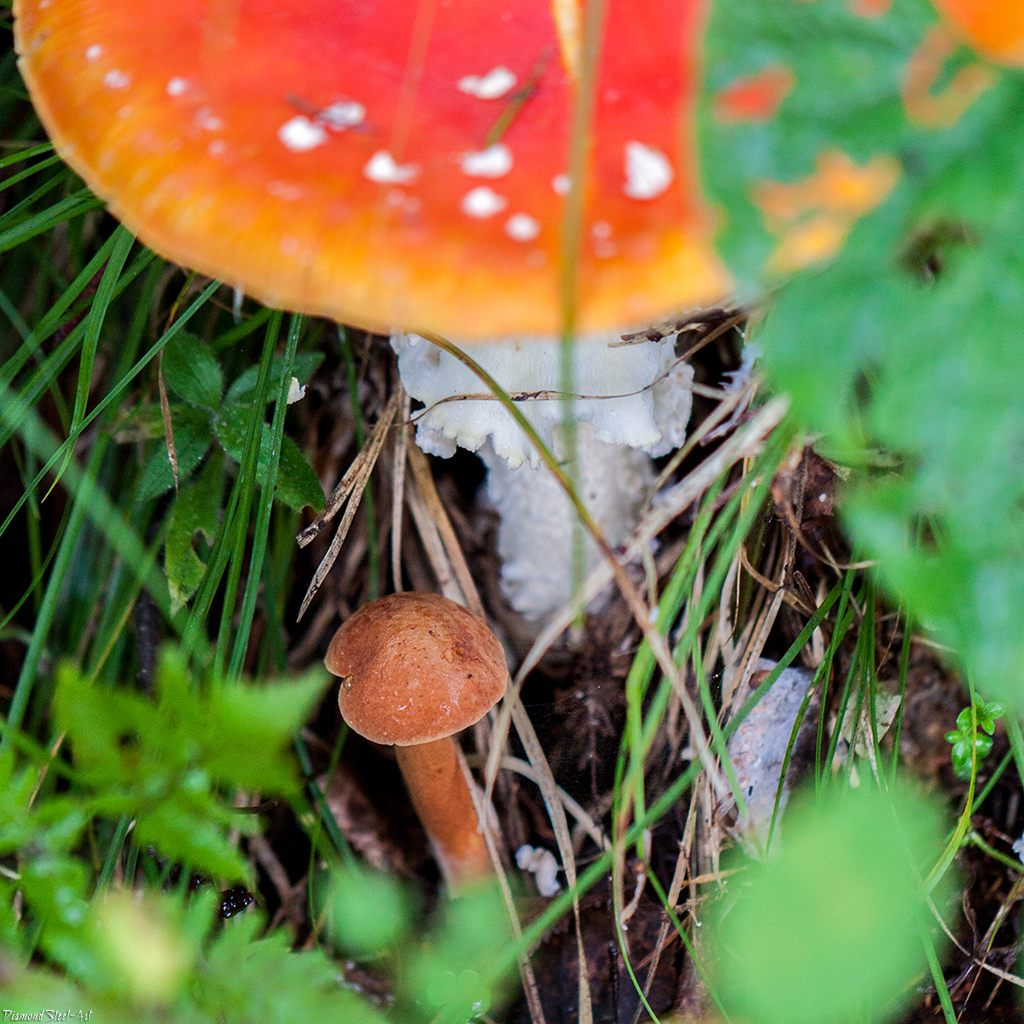
The Peppery Bolete is a small, distinct bolete known for its spicy, peppery taste. It is recognized by its rusty-brown colors and often reddish-tinged tube layer, reflecting its unique role as a potential mycoparasite of other bolete species.
How to Identify
- Cap
- Convex to flat, cinnamon-brown to reddish-brown, often sticky when moist, smooth or finely suede-like.
- Gills
- Pore surface rather than true gills, angular, rusty-brown to cinnamon, decurrent.
- Stem
- Slender, colored similarly to the cap but lighter at the base, typically featuring bright yellow mycelium at the base.
- Flesh
- Yellowish, generally unchanging when cut, though may show faint bruising; taste is intensely peppery.
- Fruiting body
- Small, slender stature with a cap 2-7 cm in diameter.
- Habitat
- Associated with both coniferous and deciduous trees, often found in nutrient-poor acidic soils.
Key Facts
- Cap surfaces: Slightly viscid to matte
- Growth Form: Solitary to gregarious
- Spore Print: Cinnamon-brown
- Body color: Rust-brown to yellow
- Odor: Mild/None
- Flesh bruises: Little to no change
- Height: 4-8 cm
- Cap Diameter: 2-7 cm
- Nutrient gathering: Mycorrhizal and potentially mycoparasitic
Safe
SafeGenerally considered edible but often used sparingly as a spice due to its sharp peppery taste. Some sources advise caution regarding potential GI irritation if consumed in large quantities.
Quick Check
- Odor: Indistinct or slightly fruity.
- Fruiting: Summer through autumn.
- Substrate: Soil/Mycorrhizal with trees.
Where to Find
Temperate Forests
Common throughout Europe and North America in mixed woodland settings.
Finding Tips
Taste Test
A tiny nibble of the raw flesh will reveal an immediate, intense peppery heat, which is the most reliable field characteristic.
Look for Mycelium
Look for the distinct bright yellow mycelium at the very base of the stem.
Similar Species
Ruby Bolete
Hortiboletus rubellus
Also known as: Red-cracking Bolete
Bitter Bolete
Tylopilus felleus
Also known as: Bitter-flesh Bolete
Scientific Classification
- Phylum
- Basidiomycota
- Class
- Agaricomycetes
- Order
- Boletales
- Family
- Boletaceae
- Genus
- Chalciporus
Storage Information
- Max Temperature: 4°C
- Freezing duration: Up to 6 months if dried first
- Min Temperature: 0°C
- Refrigeration: 2-3 days
How to Clean
Gently brush off debris and trim the stem base. Wipe with a damp cloth if necessary, but avoid soaking as the flesh is porous.
Explore Peppery Bolete
Identify mushrooms anywhere
Free on iOS, Android, and Web. Photo identification, full database, and your personal collection.