
Got a photo? Identify mushrooms instantly with the Mushby app
Open the appDescription
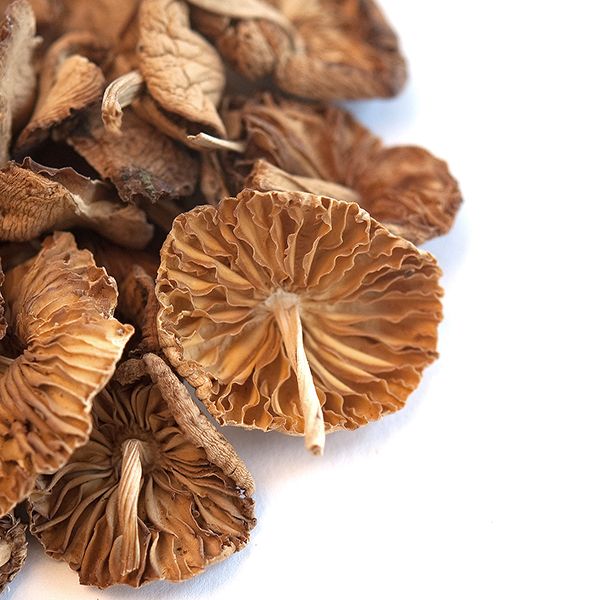
Cerrena unicolor, commonly known as the Mossy Maze Polypore, is a widespread and easily recognizable bracket fungus. It is characterized by its typically semicircular or fan-shaped fruiting bodies that grow in overlapping clusters or rows on dead hardwood. The upper surface is distinctly hairy or velvety, often zoned with shades of gray, brown, and green (due to algae), while the pore surface on the underside is labyrinthine or maze-like, hence its common name. It is a white-rot fungus, playing a crucial role in wood decomposition.
How to Identify
- Cap
- The upper surface is concentrically zoned, often with shades of gray, brown, and sometimes greenish due to algal growth. It is densely hairy or velvety, especially towards the margin, becoming smoother with age. The margin is thin and often wavy or lobed.
- Gills
- Not true gills. The underside features a poroid surface that is labyrinthine (maze-like) to daedaloid (gill-like but interconnected) or even somewhat irpicoid (tooth-like) near the margin. The pores are white to grayish, becoming darker with age. Pore mouths are irregular, elongated, and often split, measuring 0.5-2 mm long.
- Stem
- Absent (sessile), directly attached to the substrate.
- Flesh
- White to cream-colored, tough, leathery, and fibrous. It does not change color when bruised.
- Fruiting body
- Semicircular to fan-shaped, often fused laterally, forming shelves or rosettes. Typically 2-10 cm wide and 1-5 cm deep, with a thickness of 0.5-1.5 cm at the attachment point. The texture is tough and leathery.
- Habitat
- Saprobic, growing on dead hardwood logs, stumps, and branches. Occasionally found on living but weakened trees. Prefers deciduous trees, especially oak, maple, birch, and beech.
Key Facts
- Cap surfaces: Hairy to velvety, concentrically zoned, often greenish with age due to algae.
- Growth Form: Sessile, effused-reflexed, or resupinate, often in overlapping clusters.
- Spore Print: White
- Body color: Upper surface gray, brown, greenish; pore surface white to grayish.
- Odor: Mild, indistinct.
- Flesh bruises: No color change.
- Height: Not applicable (sessile)
- Cap Diameter: 2-10 cm wide, 1-5 cm deep
- Nutrient gathering: Saprobic (decomposes dead wood)
Safe
SafeCerrena unicolor is generally considered non-toxic but is inedible due to its extremely tough, leathery texture. It has no culinary value. There are no known reports of toxicity from ingestion, but it is not recommended for consumption.
Quick Check
- Odor: Mild, mushroomy, or indistinct.
- Fruiting: Year-round, most prominent from spring to autumn.
- Substrate: Dead hardwood (saprobic).
Where to Find
Deciduous Forests
Commonly found in deciduous and mixed forests across temperate regions of North America, Europe, and Asia.
Woodlands
Look for it on fallen logs, stumps, and dead branches of hardwood trees.
Urban Parks and Gardens
Can also be found in urban settings where dead hardwood is present.
Finding Tips
Substrate Preference
Focus your search on dead hardwood, particularly oak, maple, and birch. It rarely grows on conifers.
Growth Habit
Look for overlapping clusters or rows of bracket fungi on the sides or tops of logs and stumps.
Seasonal Availability
Fruiting bodies can be found year-round, but they are most prominent and fresh during warmer, humid months from spring through autumn.
Algal Growth
The greenish tint on the cap surface, caused by symbiotic algae, is a good indicator, especially in older specimens.
Similar Species
Turkey Tail
Polypore mushroom
Also known as: Trametes versicolor
False Turkey Tail
Polypore mushroom
Also known as: Stereum hirsutum
Smoky Polypore
Polypore mushroom
Also known as: Bjerkandera adusta
Scientific Classification
- Phylum
- Basidiomycota
- Class
- Agaricomycetes
- Order
- Polyporales
- Family
- Polyporaceae
- Genus
- Cerrena
Storage Information
- Max Temperature: Not applicable for consumption.
- Freezing duration: Not applicable for consumption.
- Min Temperature: Not applicable for consumption.
- Refrigeration: Not applicable for consumption.
How to Clean
As Cerrena unicolor is not considered edible, cleaning for consumption is not applicable. If collected for study or craft, gently brush off any debris with a soft brush. Avoid washing with water as it can damage the delicate surface features.
Explore Mossy Maze Polypore
Identify mushrooms anywhere
Free on iOS, Android, and Web. Photo identification, full database, and your personal collection.