
Got a photo? Identify mushrooms instantly with the Mushby app
Open the appDescription
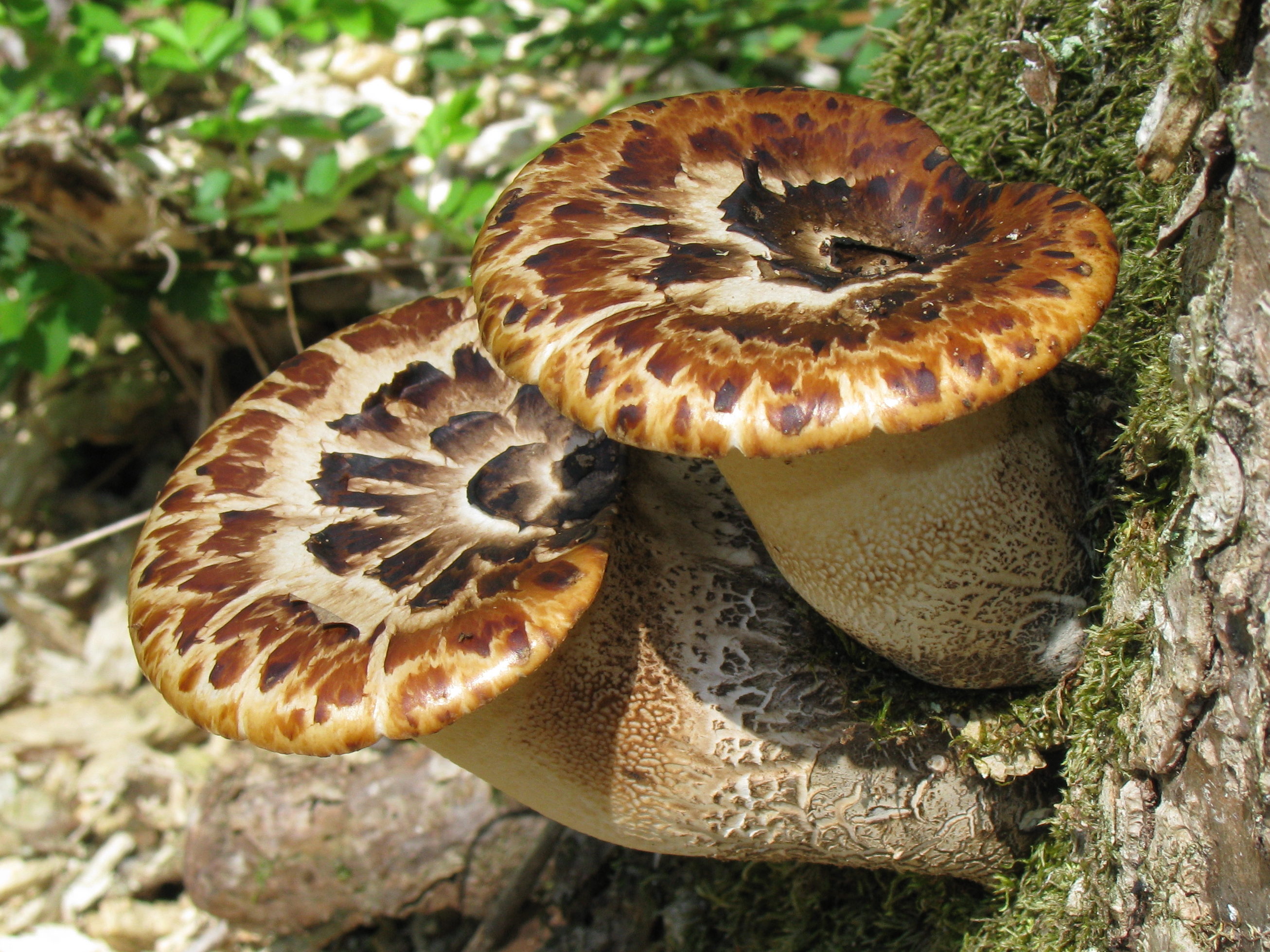
Dryad's Saddle, scientifically known as *Cerioporus squamosus* (formerly *Polyporus squamosus*), is a common bracket fungus found on dead or decaying wood. It is characterized by its large size, kidney-shaped cap, and distinctive scaly pattern on the cap's surface. The fungus is edible when young and tender, but it becomes tough and less palatable as it matures.
How to Identify
- Cap
- Kidney-shaped to semicircular, 5-60 cm wide. The surface is dry, pale yellowish-brown to tan, covered with dark brown scales arranged in a concentric pattern.
- Gills
- N/A - Dryad's Saddle has pores instead of gills. The pores are angular, white to yellowish, and extend down the stem.
- Stem
- Short, thick, and lateral (attaching to the side of the cap) or eccentric (off-center). Whitish to yellowish-brown in color.
- Flesh
- Thick, white, and fleshy when young, becoming tougher with age. Has a distinct odor, often described as watermelon rind or cucumber-like.
- Fruiting body
- A large bracket fungus that grows on wood, often in overlapping shelves.
- Habitat
- Grows on dead or dying deciduous trees, especially elm. Can be found on logs, stumps, or wounds on living trees.
Key Facts
- Cap surfaces: Dry, scaly
- Growth Form: Bracket fungus, growing in shelves
- Spore Print: White
- Body color: Pale yellowish-brown to tan with dark brown scales
- Odor: Distinct, watermelon rind or cucumber-like
- Flesh bruises: Does not typically bruise
- Height: Varies depending on the size of the bracket
- Cap Diameter: 5-60 cm
- Nutrient gathering: Saprobic or parasitic
Safe
SafeDryad's Saddle is generally considered edible when young and tender. However, older specimens can become tough and unpalatable. There are no known toxins associated with this mushroom, but as with any wild mushroom, proper identification is crucial to avoid consuming poisonous species.
Quick Check
- Odor: Watermelon rind or cucumber-like
- Fruiting: Spring to early summer
- Substrate: Dead or dying deciduous trees, especially elm
Where to Find
Deciduous Woodlands
Prefers dead or dying deciduous trees, especially elm. Often found on logs, stumps, or wounds on living trees.
Urban Areas
Common in urban environments where suitable host trees are present.
Finding Tips
Check Tree Trunks
Look for large, shelf-like structures growing out of tree trunks or logs.
Focus on Decaying Wood
Search in areas with a high density of deciduous trees, particularly those showing signs of decay.
Seasonal Timing
Early spring to early summer is the prime time to find young, edible specimens.
Similar Species
Other Polypores
mushroom
Also known as: None
Scientific Classification
- Phylum
- Basidiomycota
- Class
- Agaricomycetes
- Order
- Polyporales
- Family
- Polyporaceae
- Genus
- Cerioporus
Storage Information
- Max Temperature: 2
- Freezing duration: 3 months
- Min Temperature: -18
- Refrigeration: 1 week
How to Clean
Wipe the surface clean with a damp cloth or brush to remove debris. Trim any tough or damaged areas. Avoid soaking in water, as this can make the mushroom soggy.
Explore Dryad's Saddle
Identify mushrooms anywhere
Free on iOS, Android, and Web. Photo identification, full database, and your personal collection.