
Got a photo? Identify mushrooms instantly with the Mushby app
Open the appDescription
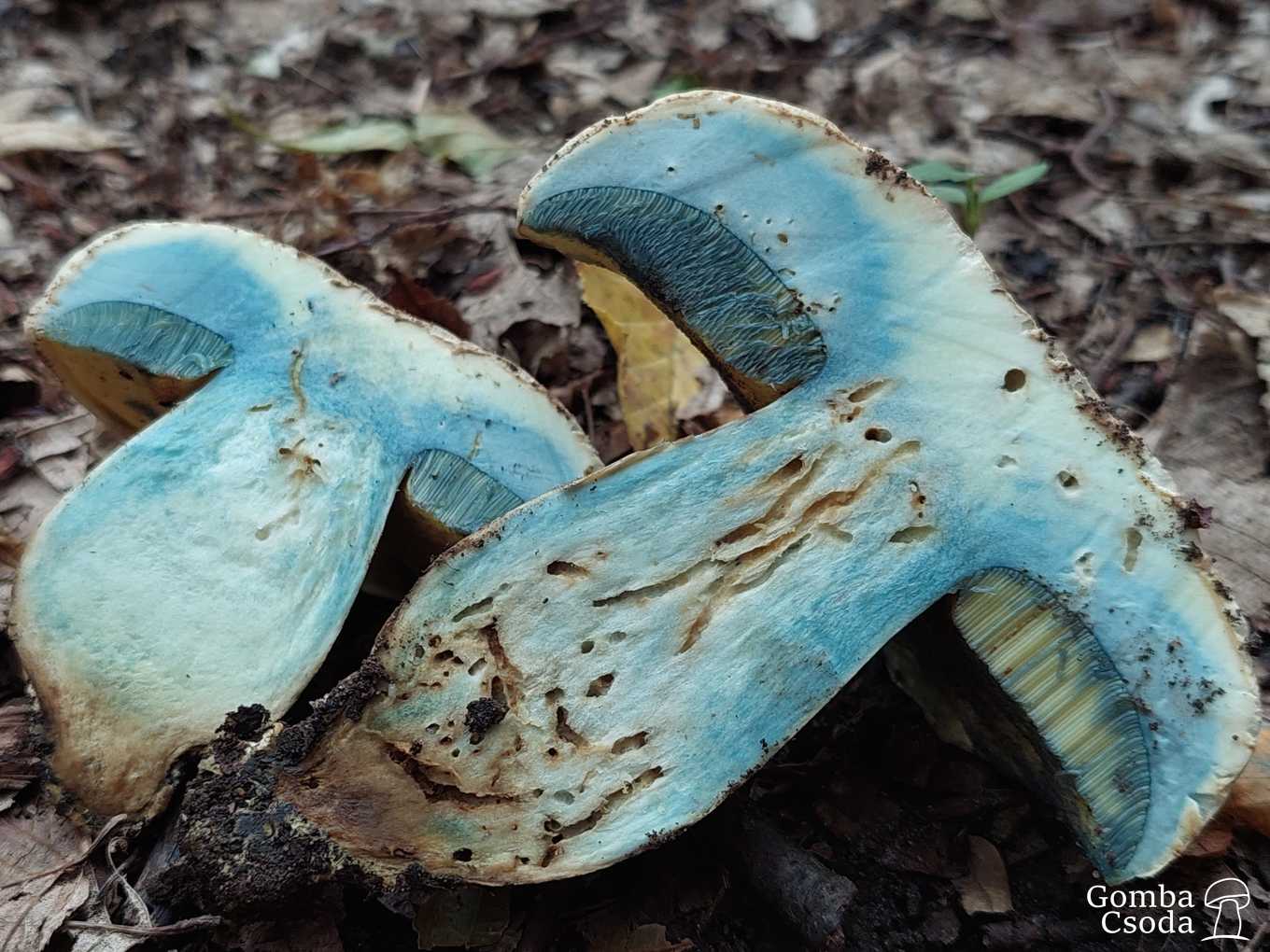
Caloboletus radicans, commonly known as the rooting bolete or rooting brown bolete, is a large mushroom distinguished by its pale cap, yellow pores that stain blue, and a rooting stem base. It is found in deciduous woodlands, particularly under oak and beech, and is known to be mildly toxic, causing gastrointestinal upset if consumed raw.
How to Identify
- Cap
- The cap is typically 10-25 cm in diameter, convex to flattened, and pale in color, ranging from whitish to pale ochre or tan. The surface is dry and smooth, sometimes becoming cracked in age.
- Gills
- This mushroom does not have gills. Instead, it has pores. The pores are small and angular, initially yellow, but quickly stain blue when bruised or handled.
- Stem
- The stem is stout and bulbous, typically 5-15 cm long and 2-5 cm thick. It is usually yellowish in the upper part and brownish towards the base. A key feature is the rooting base, which tapers into the ground. The stem surface is often finely reticulated (net-like).
- Flesh
- The flesh is thick and white, staining blue when cut or bruised, particularly in the cap. It has a mild odor and a bitter taste.
- Fruiting body
- The fruiting body of Caloboletus radicans is large and substantial, typically featuring a broad cap and a thick stem.
- Habitat
- Caloboletus radicans is found in deciduous woodlands, particularly under oak and beech trees. It is a mycorrhizal fungus, forming a symbiotic relationship with the roots of these trees. It typically fruits in summer and autumn.
Key Facts
- Cap surfaces: Dry, Smooth
- Growth Form: Mycorrhizal
- Spore Print: Olive Brown
- Body color: Pale Ochre to Tan
- Odor: Mild
- Flesh bruises: Blue
- Height: 5-15 cm
- Cap Diameter: 10-25 cm
- Nutrient gathering: Mycorrhizal
Toxic
Moderate ToxicityCaloboletus radicans is considered mildly toxic. It can cause gastrointestinal upset if consumed raw. Cooking may reduce the toxicity, but it is generally not recommended for consumption due to its bitter taste and potential for causing digestive issues.
Quick Check
- Odor: Mild
- Fruiting: Summer to Autumn
- Substrate: Deciduous Woodlands
Where to Find
Deciduous Woodlands
Prefers areas under oak and beech trees.
Europe
Commonly found in European deciduous forests.
Finding Tips
Look for Rooting Base
Check for the distinctive rooting stem base that tapers into the ground.
Check Under Oak and Beech
Search in areas with oak and beech trees during summer and autumn.
Similar Species
Bitter Bolete
mushroom
Also known as: Tylopilus felleus
Scientific Classification
- Phylum
- Basidiomycota
- Class
- Agaricomycetes
- Order
- Boletales
- Family
- Boletaceae
- Genus
- Caloboletus
Explore Rooting Bolete
Identify mushrooms anywhere
Free on iOS, Android, and Web. Photo identification, full database, and your personal collection.