
Got a photo? Identify mushrooms instantly with the Mushby app
Open the appDescription
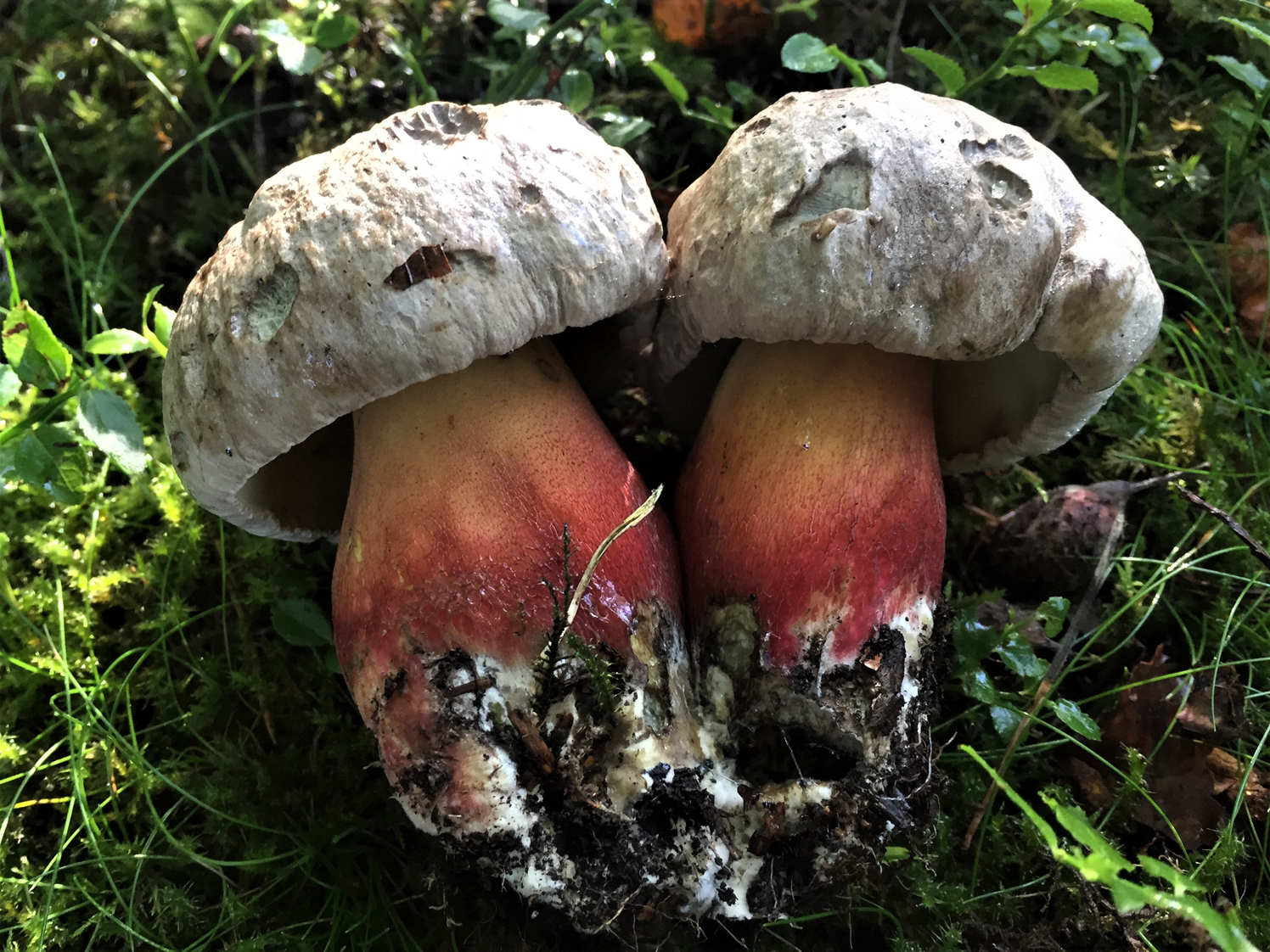
Caloboletus calopus, commonly known as the Bitter Beech Bolete, is a striking bolete mushroom characterized by its pale cap, yellow pores that bruise blue, and a distinctive red-flushed, reticulated stem. Its most defining feature is its intensely bitter taste, which renders it inedible. It is a mycorrhizal fungus, typically found in association with broadleaf trees, especially beech, and sometimes conifers.
How to Identify
- Cap
- 5-15 cm (2-6 inches) in diameter, hemispherical to convex, becoming broadly convex to flat with age. The color is typically pale, whitish-gray, grayish-tan, or buff, sometimes with olive or yellowish tints. The surface is dry, finely tomentose (velvety) when young, becoming smooth with age. It does not crack significantly.
- Gills
- Pore surface is bright lemon-yellow when young, becoming olive-yellow with age. Pores are small and round. They instantly bruise blue when touched or damaged. Tubes are adnate to depressed around the stem.
- Stem
- 5-15 cm (2-6 inches) long and 2-5 cm (0.8-2 inches) thick, stout and club-shaped when young, becoming more cylindrical or bulbous at the base with age. The upper part of the stem is yellow, often with a fine red reticulum (net-like pattern) that extends downwards. The lower part of the stem is typically flushed with red or carmine, sometimes entirely red. The base can be yellowish. The surface is dry.
- Flesh
- Pale yellow, firm, and thick. It stains blue when cut or bruised, especially in the cap and upper stem. The taste is intensely bitter, even a small piece can ruin a meal.
- Fruiting body
- A robust, fleshy mushroom with a cap, pores, and a stout stem.
- Habitat
- Mycorrhizal, forming symbiotic relationships primarily with broadleaf trees, especially beech (Fagus) and oak (Quercus), but can also be found with conifers like spruce (Picea) and fir (Abies). Grows solitarily or scattered on the ground in deciduous and mixed forests.
Key Facts
- Cap surfaces: Dry, finely tomentose to smooth.
- Growth Form: Solitary to scattered.
- Spore Print: Olive-brown.
- Body color: Cap: whitish-gray, grayish-tan; Pores: lemon-yellow to olive-yellow; Stem: yellow with red flush and reticulum.
- Odor: Mild.
- Flesh bruises: Blue, especially in the cap and upper stem.
- Height: 5-15 cm (2-6 inches)
- Cap Diameter: 5-15 cm (2-6 inches)
- Nutrient gathering: Mycorrhizal
Safe
SafeCaloboletus calopus is not considered toxic in the sense of causing severe poisoning, but it is intensely bitter and therefore inedible. Ingesting it will cause extreme unpleasantness and can ruin any dish it is included in. Some sources suggest it might cause mild gastrointestinal upset in sensitive individuals if consumed in large quantities, but its bitterness usually prevents this.
Quick Check
- Odor: Mild, sometimes slightly fruity or acidic.
- Fruiting: Summer to early autumn (July-October).
- Substrate: Terrestrial, mycorrhizal with broadleaf trees (especially beech, oak) and sometimes conifers.
Where to Find
Europe
Widespread across Europe, particularly in central and southern regions.
North America
Reported in parts of eastern North America, though less common than in Europe. Some North American collections previously identified as C. calopus may represent distinct species or varieties.
Finding Tips
Habitat Preference
Look for it in deciduous and mixed forests, especially under beech and oak trees. It prefers well-drained, often calcareous soils.
Seasonality
Typically fruits from summer to early autumn (July to October), with peak occurrences in late summer.
Visual Cues
Its pale cap, yellow pores that bruise blue, and the distinctive red-flushed, reticulated stem are key identification features. Always check for the bitter taste by touching a small piece to the tongue (do not swallow).
Similar Species
Satan's Bolete
Rubroboletus
Also known as: Devil's Bolete
Scarletina Bolete
Neoboletus
Also known as: Red-cracked Bolete
Bicolor Bolete
Baorangia
Also known as: Two-colored Bolete
Scientific Classification
- Phylum
- Basidiomycota
- Class
- Agaricomycetes
- Order
- Boletales
- Family
- Boletaceae
- Genus
- Caloboletus
Storage Information
- Max Temperature: Not applicable
- Freezing duration: Not applicable
- Min Temperature: Not applicable
- Refrigeration: Not applicable
How to Clean
Not applicable, as this mushroom is inedible due to its extreme bitterness.
Explore Bitter Beech Bolete
Identify mushrooms anywhere
Free on iOS, Android, and Web. Photo identification, full database, and your personal collection.