
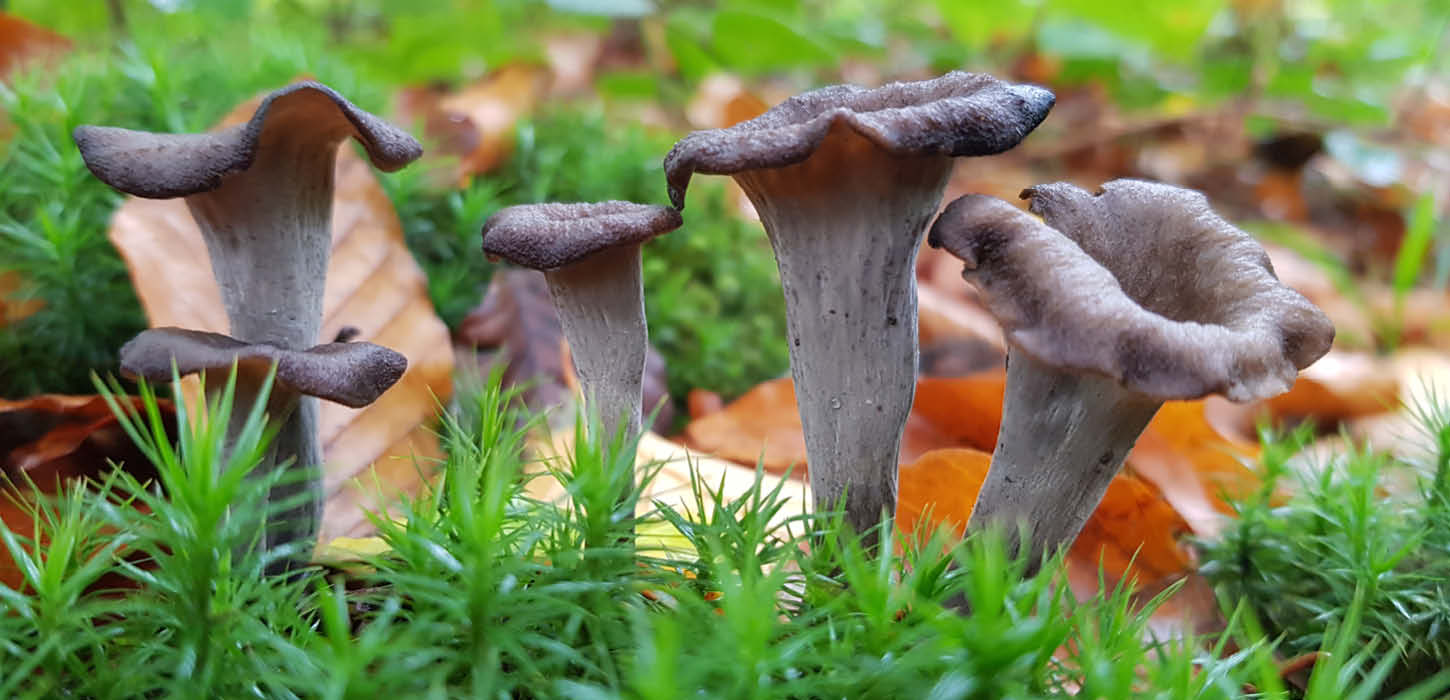
How to identify Red-mouthed bolete
Boletus erythropus
Got a photo? Identify mushrooms instantly with the Mushby app
Open the appTo correctly identify Red-mouthed bolete (Boletus erythropus), check each of these features in order. Misidentification is the most common cause of mushroom poisoning, so cross-reference multiple sources.
Step-by-step identification
- 1
Cap
Shape, color, surface texture, and diameter.
The cap is hemispherical to convex, flattening with age, measuring 5 to 20 cm (2 to 8 inches) in diameter. The color is typically dark brown, reddish-brown, or olivaceous-brown, with a finely velvety or suede-like surface texture, especially when young, becoming smoother with age. It does not crack or fissure extensively. The margin is often inrolled when young.
- 2
Gills
Attachment to stem, color, and spacing.
Instead of gills, this mushroom has a pore surface. The pores are small, circular, and initially vivid red or crimson, fading somewhat to orange-red with age. They bruise instantly and intensely dark blue or blackish-blue upon touch. The tubes are concolorous with the pores. The pore layer is depressed around the stem.
- 3
Stem
Length, shape, surface, and any ring.
The stem is robust and solid, measuring 5 to 15 cm (2 to 6 inches) in height and 1.5 to 5 cm (0.6 to 2 inches) in thickness. It is typically cylindrical to club-shaped, often broader towards the base. The color is yellowish to orange-red or reddish-brown, densely covered with minute red to orange-red, granular or punctate (dotted) points or scales (scabrosities) against a yellow background. This gives it a 'red-dotted' appearance. It lacks a true reticulation (net-like pattern). The base of the stem often displays reddish or brownish stains. The extreme base may show a touch of crimson.
- 4
Flesh
Color, texture, and bruising reaction.
The flesh is pale yellow to lemon-yellow. When cut or bruised, it rapidly stains dark blue to indigo, particularly in the cap and upper part of the stem. This bluing reaction is a key identifying feature.
- 5
Fruiting body
Overall growth pattern.
The fruiting body is stout and fleshy, typical of many boletes, with a distinct cap, pore surface, and stem.
- 6
Habitat
Where it grows and on what substrate.
Typically found growing solitary or scattered in mixed deciduous and coniferous forests. It forms ectomycorrhizal associations with a wide range of trees, including oaks, beeches, birches, pines, and spruces. It prefers well-drained, acidic to neutral soils.
Key Facts
- Cap surfaces
- Velvety, suede-like, smooth with age
- Growth Form
- Solitary or scattered
- Spore Print
- Olive-brown
- Body color
- Dark brown cap, red pores, yellow flesh, reddish-dotted stem
- Odor
- Mild
- Flesh bruises
- Rapidly and intensely dark blue
- Height
- 5-15 cm (2-6 inches)
- Cap Diameter
- 5-20 cm (2-8 inches)
Fruit body characteristics
- Gill attachment: No gills, pore surface is adnate to depressed around the stem
- Stem shape: Cylindrical to club-shaped, often thicker towards the base
- Stem surface: Yellowish to orange-red, densely covered with minute red to orange-red punctations (dots)
- Ring: Absent
- Stem cross-section: Solid
Explore Red-mouthed bolete
Identify mushrooms anywhere
Free on iOS, Android, and Web. Photo identification, full database, and your personal collection.