
Got a photo? Identify mushrooms instantly with the Mushby app
Open the appDescription
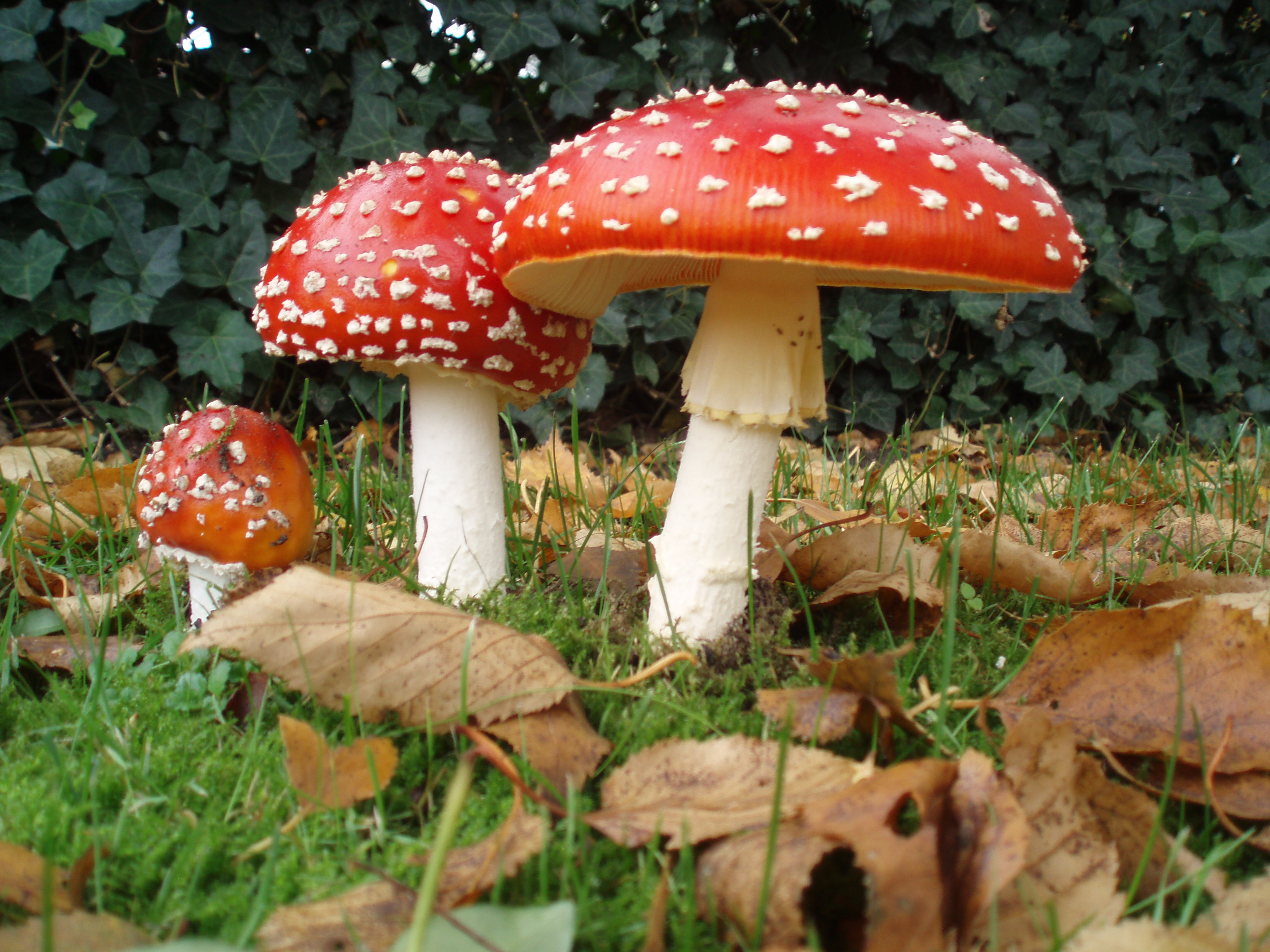
Amanita muscaria, commonly known as Fly Agaric, is a distinctive and iconic mushroom, widely recognized for its bright red or orange cap adorned with white to yellowish warts. It is a psychoactive basidiomycete fungus and one of the most recognizable and widely encountered in the genus Amanita. Despite its striking appearance, it is considered poisonous and psychoactive, containing ibotenic acid and muscimol. It has a long history of cultural and spiritual significance in various parts of the world.
How to Identify
- Cap
- The cap is typically 5-20 cm (2-8 inches) in diameter, initially globose to hemispherical, becoming convex and then plano-convex to flat with age. The color is highly variable depending on the subspecies and geographic location, ranging from bright red (classic) to orange, yellow, or even white. It is covered with numerous white to yellowish, pyramidal warts, which are remnants of the universal veil. These warts can be washed off by rain. The margin is often striate in mature specimens.
- Gills
- The gills are free to adnexed, crowded, broad, and white to cream-colored. They are often slightly notched at the stem attachment.
- Stem
- The stem is 5-20 cm (2-8 inches) long and 1-3 cm (0.4-1.2 inches) thick, white to yellowish, solid when young, becoming hollow with age. It is typically bulbous at the base, often with concentric rings or scales (remnants of the universal veil) forming a volva. A prominent, skirt-like, white to yellowish ring (annulus) is present high on the stem, often with a striate upper surface.
- Flesh
- The flesh is white, firm, and does not change color when cut or bruised. It has a mild, pleasant odor and taste (though tasting is not recommended due to toxicity).
- Fruiting body
- The fruiting body is a classic agaric shape, consisting of a cap, gills, stem, and volva. It emerges from an egg-like universal veil.
- Habitat
- Amanita muscaria is a mycorrhizal fungus, forming symbiotic relationships with various trees, primarily conifers (pine, spruce, fir) and deciduous trees (birch, oak, beech). It is commonly found growing solitarily or in scattered groups on the ground in forests and woodlands.
Key Facts
- Cap surfaces: Smooth, viscid when moist, covered with white to yellowish warts
- Growth Form: Solitary or scattered
- Spore Print: White
- Body color: Cap: Red, orange, yellow, white; Gills: White; Stem: White to yellowish
- Odor: Mild, pleasant
- Flesh bruises: No change
- Height: 5-20 cm (2-8 inches)
- Cap Diameter: 5-20 cm (2-8 inches)
- Nutrient gathering: Mycorrhizal
Toxic
Severe ToxicityAmanita muscaria is considered poisonous and psychoactive. It contains ibotenic acid and muscimol, which are neurotoxins. Symptoms of poisoning, known as muscimol syndrome, typically appear 30 minutes to 2 hours after ingestion and can include nausea, vomiting, diarrhea, confusion, disorientation, visual distortions, muscle spasms, and drowsiness. In severe cases, coma or seizures can occur. While fatalities are rare, severe discomfort and medical intervention are often required. It is crucial to emphasize that this mushroom should never be consumed for recreational or culinary purposes without expert guidance and proper detoxification, which is a complex and potentially dangerous process.
Quick Check
- Odor: Mild, pleasant
- Fruiting: Late summer to late autumn
- Substrate: Ground, mycorrhizal with conifers and deciduous trees
Where to Find
Northern Hemisphere
Widely distributed across the temperate and boreal regions of the Northern Hemisphere, including North America, Europe, and Asia.
Southern Hemisphere
Introduced to the Southern Hemisphere, where it has established populations in countries like Australia, New Zealand, and South Africa, often associated with introduced pine and birch trees.
Finding Tips
Look for host trees
Focus your search in forests and woodlands where conifers (pine, spruce, fir) and deciduous trees (birch, oak, beech) are present, as it forms mycorrhizal associations with these trees.
Seasonal timing
The primary fruiting season is late summer to late autumn, but it can appear earlier or later depending on local climate and rainfall.
Ground level observation
Scan the forest floor, particularly under leaf litter or moss, as young specimens can be partially concealed.
Similar Species
Caesar's Mushroom
Amanita caesarea
Also known as: Royal Amanita
Blusher
Amanita rubescens
Also known as: European Blusher
Yellow Patches
Amanita flavoconia
Also known as: Yellow-orange Amanita
Panther Cap
Amanita pantherina
Also known as: Panther Amanita
Scientific Classification
- Phylum
- Basidiomycota
- Class
- Agaricomycetes
- Order
- Agaricales
- Family
- Amanitaceae
- Genus
- Amanita
Explore Fly Agaric
Identify mushrooms anywhere
Free on iOS, Android, and Web. Photo identification, full database, and your personal collection.