
Got a photo? Identify mushrooms instantly with the Mushby app
Open the appDescription
Agaricus vernalis is a rare member of the Agaricus genus, characterized by its emergence during the spring season, distinguishing it from most other Agaricus species which typically fruit in late summer or autumn.
How to Identify
- Cap
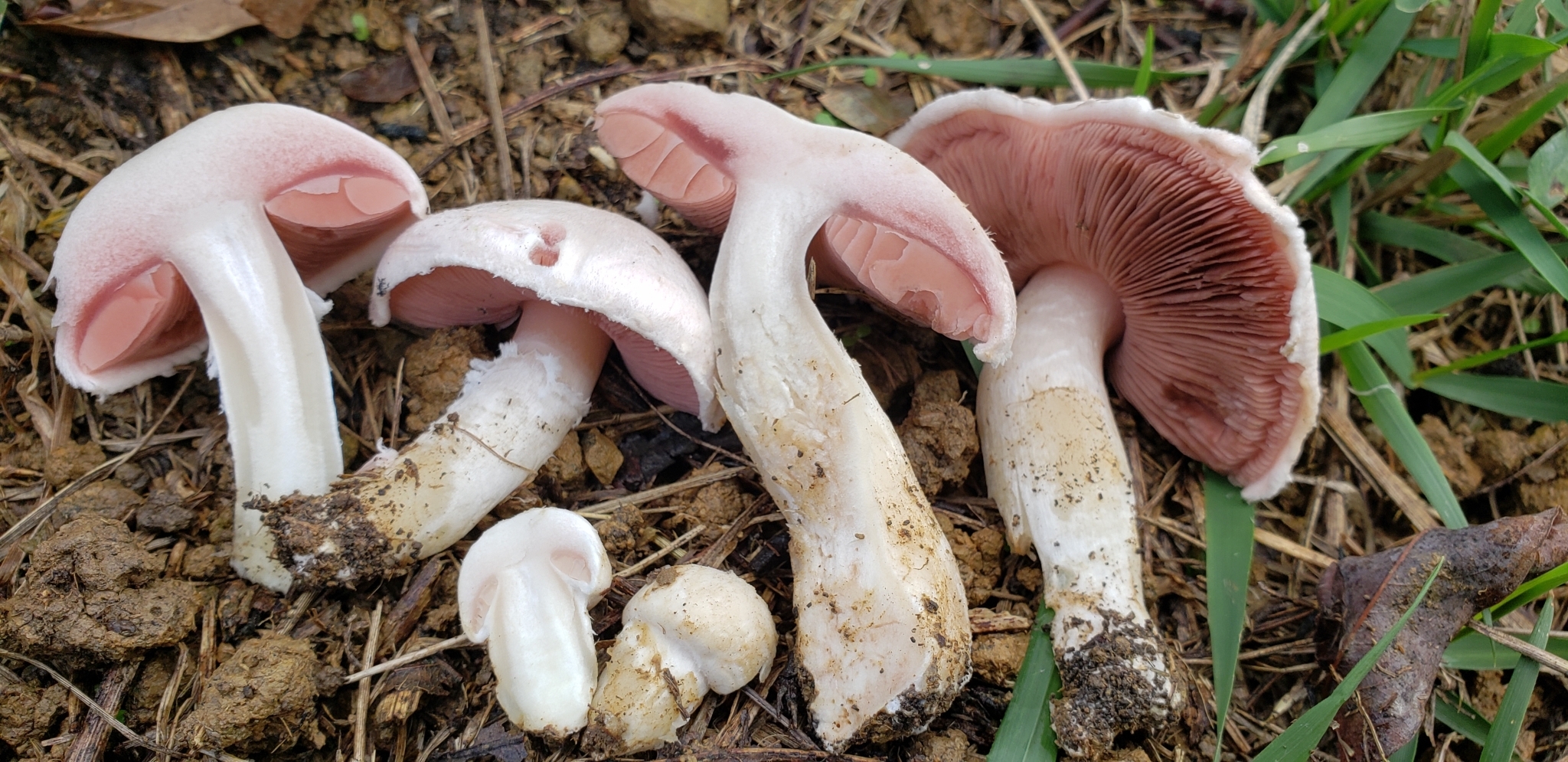
- Initially convex, flattening with age, usually 5-10 cm in diameter, surface often slightly fibrous.
- Gills
- Free from the stem, initially pinkish, turning dark chocolate brown at maturity.
- Stem
- Sturdy, white, with a persistent membranous ring (annulus) located on the upper part of the stipe.
- Flesh
- White, may show slight yellowing or browning when cut.
- Fruiting body
- Medium-sized mushroom with a whitish to pale brownish cap.
- Habitat
- Often found in grassy areas, fields, and near the edges of deciduous woodlands during the spring months.
Key Facts
- Cap surfaces: Smooth to slightly fibrous
- Growth Form: Solitary or in small groups
- Spore Print: Chocolate brown
- Body color: White/Off-white
- Odor: Mildly aromatic
- Flesh bruises: Often yellowing upon handling
- Height: 6-12 cm
- Cap Diameter: 5-10 cm
- Nutrient gathering: Saprotrophic
Toxic
Moderate ToxicityWhile many Agaricus species are edible, A. vernalis is not well-documented as a culinary species and caution is advised due to confusion with toxic look-alikes like A. xanthodermus.
Quick Check
- Odor: Pleasant, fungal, sometimes slightly almond-like.
- Fruiting: Spring
- Substrate: Soil/Grass
Where to Find
Temperate Grasslands
Typical for various regions in Europe and parts of North America where spring conditions are moderate.
Finding Tips
Seasonality
The key feature is the timing; look for it in the spring when other typical Agaricus species are not yet present.
Soil conditions
Prefers nutrient-rich, well-draining soil, often found in parklands or managed meadows.
Similar Species
Yellow Stainer
Agaricus xanthodermus
Also known as: Agaricus xanthoderma
Field Mushroom
Agaricus campestris
Also known as: Meadow Mushroom
Scientific Classification
- Phylum
- Basidiomycota
- Class
- Agaricomycetes
- Order
- Agaricales
- Family
- Agaricaceae
- Genus
- Agaricus
Explore Spring Agaric
Identify mushrooms anywhere
Free on iOS, Android, and Web. Photo identification, full database, and your personal collection.