
¿Tienes una foto? Identifica hongos al instante con la app Mushby
Abrir la appDescripción
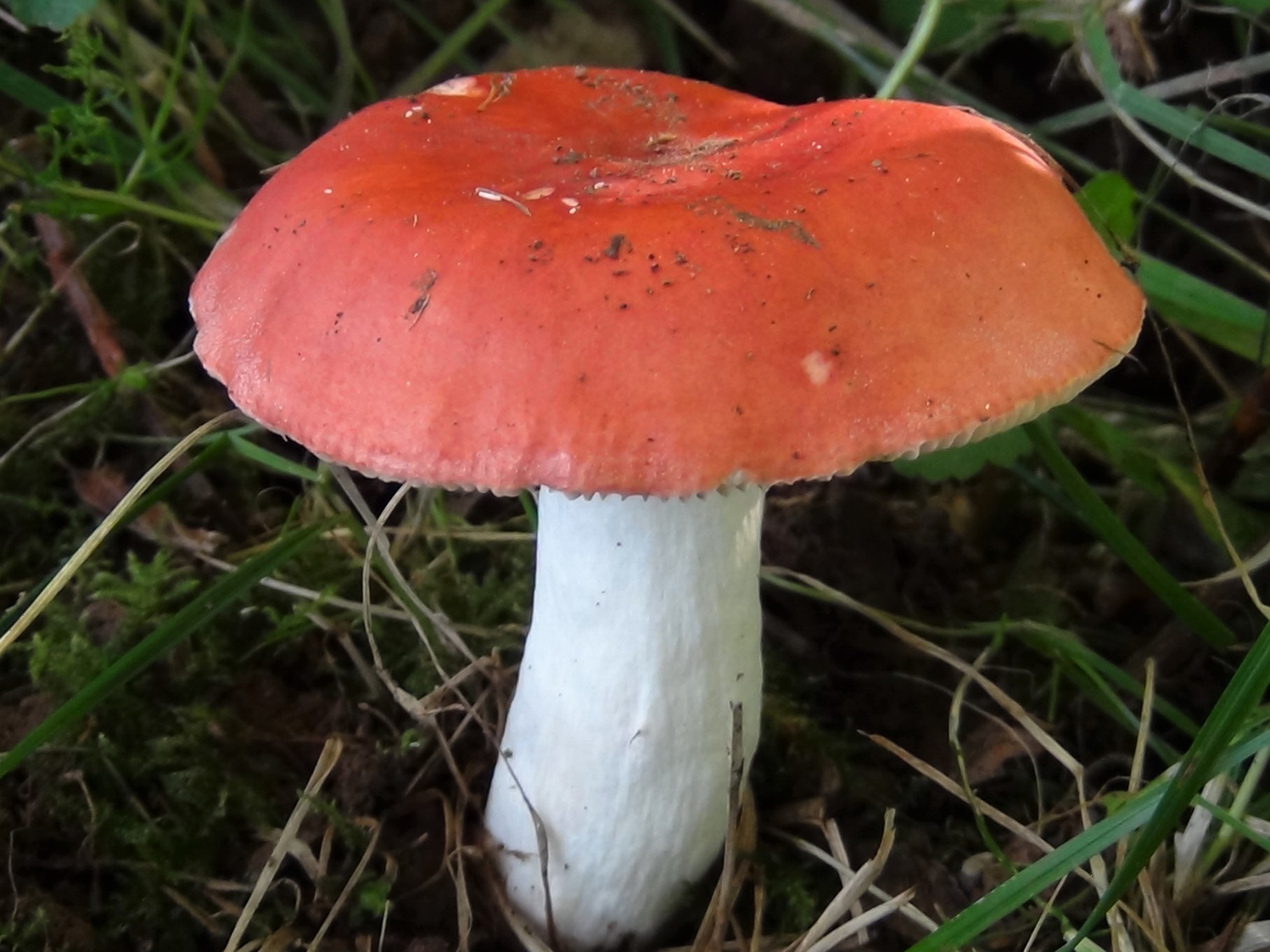
Russula emetica, commonly known as the Sickener, is a widespread agaric fungus of the family Russulaceae. It is characterized by its bright red cap, white gills, and acrid taste. The fungus is typically found in coniferous and deciduous woodlands and is known to cause gastrointestinal upset if consumed raw or improperly cooked.
Cómo identificar
- Sombrero
- The cap is bright red, sometimes fading to pinkish-red with age. The surface is smooth and viscid (slimy when wet), and the margin is typically peeling. Cap diameter ranges from 5-10 cm.
- Láminas
- The gills are white to creamy-white, adnexed to nearly free, and moderately crowded. They are brittle and often exude droplets when young.
- Pie
- The stem is white, cylindrical, and typically measures 5-8 cm in length and 1-2 cm in diameter. The surface is dry and may be slightly roughened.
- Carne
- The flesh is white and brittle. It has a hot, acrid taste.
- Cuerpo fructífero
- The fruit body is of medium size, with a cap typically ranging from 5 to 10 cm in diameter. It exhibits a convex shape when young, later flattening out.
- Hábitat
- Found in coniferous and deciduous woodlands, particularly under pine and birch trees. It prefers moist, acidic soils. It forms ectomycorrhizal associations with trees.
Datos clave
- Superficie del sombrero: Viscid when wet
- Forma de crecimiento: Mycorrhizal
- Esporada: White
- Color del cuerpo: Red, fading to pinkish-red
- Olor: Mild, fruity or fishy when old
- Cambio de color al corte: Not bruising
- Altura: 5-8 cm
- Diámetro del sombrero: 5-10 cm
- Forma de nutrición: Mycorrhizal
Tóxico
Toxicidad moderadaRussula emetica contains compounds that can cause gastrointestinal irritation. Symptoms typically include nausea, vomiting, abdominal cramps, and diarrhea. Severity can vary depending on the amount consumed and individual sensitivity.
Verificación rápida
- Olor: Slightly fruity or odorless when young, sometimes developing a fishy odor when older.
- Fructificación: Solitary or scattered
- Sustrato: Soil, typically under trees
Dónde encontrar
Coniferous Forests
Commonly found under pine trees in coniferous forests.
Deciduous Forests
Also found in deciduous forests, particularly under birch trees.
Moist, Acidic Soils
Prefers moist and acidic soil conditions.
Consejos para encontrar
Check under pine and birch
Look for Russula emetica near pine and birch trees in woodland areas.
Search in moist areas
Focus your search in areas with moist soil, especially after rain.
Look for bright red caps
The bright red cap is a key identifying feature, but be aware that color can fade.
Especies similares
Russula nobilis
Mushroom
También conocida como: Beech Sickener
Russula mairei
Mushroom
También conocida como: None widely known
Russula persicina
Mushroom
También conocida como: Peach Russula
Clasificación científica
- Filo
- Basidiomycota
- Clase
- Agaricomycetes
- Orden
- Russulales
- Familia
- Russulaceae
- Género
- Russula
Explora Emetic Russula, Sickener
Identifica hongos donde sea
Gratis en iOS, Android y Web. Identificación por foto, base de datos completa y tu colección personal.